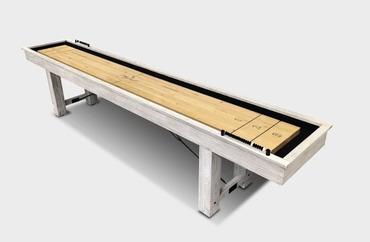
Choosing a shuffleboard table involves more than selecting a design that looks good in a room. The right table should fit the available space, provide a smooth playing surface, and match how often it will be used. Size, construction quality, materials, climate adjusters, and maintenance requirements can all affect the playing experience.
So, How Do You Choose the Right Shuffleboard Table Start by considering where the table will be placed, who will use it, and how much space is available for comfortable play. Understanding these practical factors can help you select a table that suits both recreational and regular use.
Consider the Available Room Space
One of the first things to check is the amount of space available around the shuffleboard table. Tables are available in several lengths, and choosing one that is too large can make the room uncomfortable to use.
A shuffleboard table should have enough clearance around both ends and sides. Players need space to stand, move, and release the pucks without hitting nearby furniture or walls.
Measure Before Choosing a Table
Measure the length and width of the room before comparing table sizes. Avoid using only the table dimensions when planning the layout.
As a general consideration, leaving approximately two to three feet of open space around the playing area can make gameplay more comfortable. Larger rooms can accommodate longer tables, while shorter models may work better in game rooms, apartments, offices, or smaller entertainment areas.

Choose the Appropriate Shuffleboard Table Size
Shuffleboard tables come in different lengths, commonly ranging from compact models to full-length tables used for more traditional gameplay.
Shorter tables are generally easier to place in residential spaces. They can also be suitable for beginners and casual players. Longer tables provide a larger playing surface and may require greater control when players slide the puck.
Before selecting a size, consider the experience level of the players and the amount of floor space available.
Residential and Full-Size Options
A compact shuffleboard table can work well for family entertainment rooms or areas where space is limited. Mid-sized tables offer a balance between space requirements and playing distance.
Full-size shuffleboard tables are better suited to larger recreational rooms and commercial environments where players want a longer playing surface. However, they also require considerably more room.
Check the Playing Surface Material
The playing surface is one of the most important parts of a shuffleboard table. Its construction can influence puck movement, durability, and maintenance.
Many quality tables use hardwood playing surfaces. Common materials may include maple and other dense woods that can withstand repeated play.
A well-made surface should remain level and provide consistent puck movement.
Look at Surface Finish and Thickness
The finish protects the wood while helping the puck slide smoothly. Polymer or similar protective coatings are often applied to the playing surface to reduce wear and protect it from minor scratches.
Surface thickness is another consideration. A thicker playing bed may provide additional durability and can often handle adjustment or refinishing more effectively over time.
Review the Table Construction
A shuffleboard table must remain stable during play. Weak legs or a lightweight cabinet can result in movement when players lean against the table or release a puck.
Look for a frame with solid construction and properly supported legs. Reinforcement can be particularly important for longer tables because the playing surface has more weight to support.
Check Leg Levelers
Adjustable leg levelers can help maintain a flat playing surface when the floor is slightly uneven.
Even a small difference in table height can affect puck movement. Proper leveling therefore plays an important role in maintaining consistent gameplay.
Look for Climate Adjusters
Wood naturally responds to changes in temperature and humidity. A shuffleboard playing surface may develop a slight curve as environmental conditions change.
Climate adjusters are installed underneath many shuffleboard tables to help manage these changes. They allow small adjustments to the playing surface when necessary.
For people living in areas with noticeable seasonal humidity changes, this feature can be especially useful.
Consider the Scoring System and Accessories
Traditional shuffleboard tables usually have scoring zones marked directly on the playing surface. Some models may also include electronic scoring systems.
Electronic scoring can be convenient in recreational rooms, while traditional scoring keeps the table simpler and requires fewer components.
Also check which accessories are included with the table. Common accessories include pucks, shuffleboard wax or powder, cleaning products, and table covers.
Check Replacement Accessory Availability
Accessories eventually wear out or require replacement. Before choosing a table, check whether compatible pucks, cleaning supplies, climate adjuster parts, and other components are readily available.
This can make long-term maintenance easier.
Think About Maintenance Requirements
A shuffleboard table requires regular care to maintain smooth puck movement.
The playing surface should be cleaned periodically to remove dust and old shuffleboard powder. Fresh powder can then be applied according to the type of table and desired playing speed.
Using a table cover when the table is not in use can also reduce dust accumulation and protect the playing surface.
Avoid placing drinks, heavy objects, or sharp items directly on the playing area.
Match the Table to How Often You Will Play
A table used occasionally at home may not require the same construction as one placed in a busy game room or commercial environment.
Frequent players may benefit from a heavier frame, thicker playing surface, durable coating, and reliable climate adjusters. Casual users may prefer a smaller table that is easier to fit into the available space.
Understanding how often the table will be used can help you decide which features are worth prioritizing.
Final Thoughts
If you are wondering How Do You Choose the Right Shuffleboard Table?, begin with practical considerations rather than appearance alone. Measure the room carefully, determine an appropriate table length, and examine the playing surface, frame construction, leveling system, and climate adjusters.
A suitable shuffleboard table should provide enough playing space, remain stable, and offer a smooth and consistent surface. By comparing these factors before making a decision, you can choose a table that fits your room and supports enjoyable gameplay for years to come.