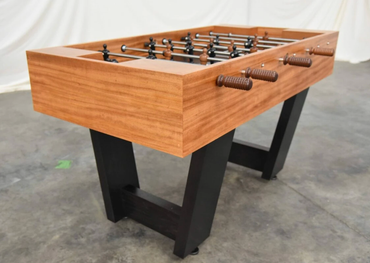
Table games have long provided a simple way for people to spend time together, compete, and develop practical skills. Among the many options available, foosball continues to hold a familiar place in homes, recreation rooms, offices, clubs, and entertainment spaces. Its combination of straightforward rules and fast-paced gameplay makes it accessible to people with different levels of experience.
Understanding why a foosball table remains one of the most popular table games requires looking beyond the basic mechanics. Football encourages social interaction, requires limited setup, develops coordination, and can be played in relatively small indoor spaces. These characteristics have helped the game remain relevant even as digital entertainment has become more common.
Foosball Is Easy to Understand
One reason foosball has maintained its popularity is its simple concept. Players control rows of figures attached to rotating rods and attempt to move the ball into the opposing goal.
New players can understand the basic objective within minutes. There is no need to study complicated rules before beginning a casual game. At the same time, experienced players can develop more advanced techniques involving passing, ball control, positioning, and shooting.
This balance between accessibility and skill development makes foosball suitable for both occasional and regular players.
Suitable for Different Experience Levels
A beginner does not need previous experience to participate. Basic movements such as turning the rods and following the ball are easy to learn.
As players become more familiar with the game, they can practise controlled passes, defensive positioning, shot placement, and faster reactions. This gradual learning process means the game can remain interesting even after the basic rules have been mastered.

It Encourages Face-to-Face Interaction
Many forms of modern entertainment involve individual screens. Foosball provides a different experience because players stand around the same table and interact directly with one another.
A match naturally encourages conversation, friendly competition, and shared attention. This makes the game suitable for family gatherings, recreation areas, social events, and casual breaks with friends or colleagues.
Foosball can also be played individually or in teams, depending on the number of participants and the size of the table.
Team Play Adds a Social Element
Doubles matches require players to coordinate their movements. One player may control defensive rods while another manages attacking positions.
This format encourages communication and cooperation. It also allows four people to participate in the same match rather than waiting for separate turns.
Foosball Develops Hand-Eye Coordination
Although foosball is primarily a recreational activity, regular play involves several physical and mental skills.
Players need to watch the ball while controlling multiple rods. They must react quickly to changes in direction and decide when to pass, defend, or shoot.
These actions involve hand-eye coordination, reaction time, concentration, and spatial awareness. More experienced players also learn to anticipate an opponent's movements rather than simply reacting to the ball.
Games Can Be Short and Flexible
Not every recreational activity fits easily into a busy schedule. A foosball match can usually be started quickly because there is little preparation required.
Players place the ball on the table, decide how the match will be scored, and begin. Games can be short or extended depending on the players' preferences.
This flexibility makes foosball suitable for short breaks as well as longer game sessions. There is also minimal cleanup once a match ends.
A Foosball Table Works in Different Indoor Spaces
Foosball does not require a full-size sports area. A table can be placed in a game room, family room, recreation area, office break room, basement, or similar indoor space.
However, buyers should consider more than the table's dimensions. Additional room is required around the sides so players can stand comfortably and move the rods without hitting walls, furniture, or other objects.
Measure the Playing Area Before Choosing a Table
Before selecting a foosball table, measure both the available floor area and the clearance around it.
Rod length is particularly important because rods extend beyond the sides of many tables. Sufficient clearance allows players to move naturally and helps prevent damage to surrounding furniture or walls.
Different Table Designs Suit Different Users
Foosball tables are available in several sizes and construction styles. Compact versions may suit homes with limited space, while full-size tables are often chosen for dedicated recreation areas.
Construction quality can affect stability and gameplay. A heavier table may move less during energetic matches, while sturdy rods and comfortable handles can provide more controlled movement.
The playing surface should also be reasonably level so the ball does not consistently roll toward one side.
Maintenance Is Generally Straightforward
A foosball table does not require complicated routine maintenance. Basic care usually involves keeping the playing surface clean, checking rods and handles, and ensuring moving components operate smoothly.
Dust and debris should be removed regularly because they can affect ball movement. Users should also follow the manufacturer's instructions when cleaning or lubricating components, as unsuitable products may damage certain materials.
Proper care can help maintain consistent gameplay and reduce unnecessary wear.
It Provides Screen-Free Entertainment
Foosball offers an indoor activity that does not depend on televisions, phones, gaming consoles, or internet access.
For households looking to create a recreation space with different entertainment choices, a foosball table provides an option based on physical interaction and direct competition. It can be played spontaneously without charging devices, downloading software, or setting up accounts.
This simplicity is part of its continuing appeal.
Final Thoughts
There are several practical reasons why a foosball table remains one of the most popular table games. The rules are easy to understand, matches require little preparation, and players can continue developing their skills over time. Football also encourages face-to-face interaction and can accommodate both individual and team play.
When choosing a table, factors such as available space, construction, stability, rod clearance, and maintenance requirements should be considered. With an appropriate setup, foosball can provide an accessible form of indoor recreation for players with different ages, abilities, and experience levels.