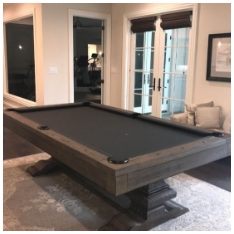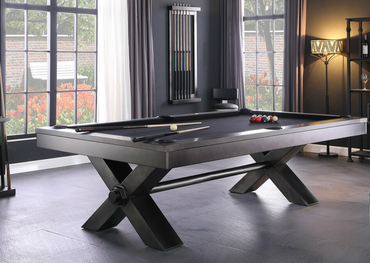
Buying a pool table is a long-term decision that involves more than choosing a design that looks suitable for your room. The table's size, construction, playing surface, frame strength, cushion quality, cloth, and installation can all affect how it performs over time.
If you are asking What Should You Look for When Buying a Pool Table start by considering where the table will be placed and how frequently it will be used. A table intended for regular games may require different construction standards from one primarily chosen as a decorative addition to a home entertainment room.
Choose the Right Pool Table Size
Pool tables are available in several sizes, and the correct option depends largely on the dimensions of the room.
Common home pool table sizes include 7-foot, 8-foot, and 9-foot models. An 8-foot table is often used in residential settings because it provides a good balance between playing area and overall space requirements.
However, the table itself is only part of the space calculation. Players also need enough room around every side to use a cue comfortably.
Measure the Room Before Buying
Measure both the length and width of the room before selecting a pool table.
A standard cue is approximately 57 to 58 inches long, so the room should provide sufficient clearance between the table and nearby walls, furniture, or other obstacles.
If the available space is limited, a slightly smaller pool table may provide a better playing experience than a larger table that restricts cue movement.

Check the Playing-Surface Material
The playing surface is one of the most important parts of a pool table because it directly affects ball movement.
Higher-quality pool tables commonly use slate as the playing surface. Slate provides a flat, stable surface that can support consistent ball movement when properly installed and levelled.
Some lighter or lower-cost tables may use engineered wood or other composite materials instead.
These options can be suitable for casual use, but they may be more sensitive to moisture, temperature changes, or movement over time.
Understand One-Piece and Three-Piece Slate
Slate pool tables may use either one-piece or three-piece construction.
Three-piece slate is commonly used in full-size home tables because individual pieces are easier to transport and can be carefully levelled during installation.
One-piece slate is often found on smaller tables but can be heavier and more difficult to move.
The right option depends on table size, access to the room, and installation requirements.
Examine the Pool Table Frame
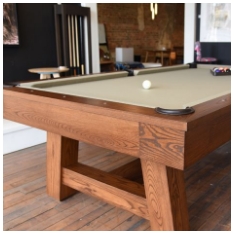
A strong frame supports the weight of the playing surface and helps the table remain stable.
This is especially important for slate tables because slate is heavy. The cabinet, beams, and legs must be able to support this weight evenly without bending or shifting.
Look for solid construction and reinforced support beneath the playing surface.
The legs should also sit firmly on the floor and should not move noticeably when pressure is applied to the table.
Review the Cushion Quality
The rubber cushions along the inside edges of a pool table influence how the balls rebound from the rails.
Good cushions should provide predictable and consistent response across all sides of the table.
Poor or ageing cushions may cause balls to rebound unevenly or lose more speed than expected.
When reviewing a table, consider the quality of the cushion material and how securely the rails are constructed.
Test Cushion Response Where Possible
If you can inspect the pool table in person, roll or strike balls toward different rails and observe the rebound.
The response should be relatively consistent around the table.
An uneven rebound may indicate differences in cushion condition, rail installation, or table alignment.
Consider the Pool Table Cloth
The cloth covering the playing surface affects ball speed, control, and general playing feel.
Pool table cloth is available in different materials and weights. Wool-blend cloth is commonly used for home and recreational tables, while faster cloth may be preferred by players who want a more tournament-style experience.
The cloth should be installed evenly, without visible wrinkles or loose sections.
Color is also worth considering because the table may become a permanent part of the room's interior design.
Look at Pocket Design and Construction
Pool tables may have drop pockets or ball-return systems.
Drop pockets hold balls individually beneath each pocket and are often used on traditional home tables. Ball-return tables guide pocketed balls to a collection area, which may be convenient for frequent play.
Check that the pockets are securely attached and appropriately sized for the type of game you intend to play.
The pocket style should also match the overall construction and appearance of the table.
Consider Installation and Levelling
Even a well-built pool table can perform poorly if it is not installed correctly.
Proper levelling is essential because even a small slope can cause balls to drift during play.
Slate tables usually require professional assembly because the slate sections must be positioned, levelled, joined, and covered correctly.
Before purchasing, find out whether installation is included and whether the installer has experience with the specific type of table.
Check Access to the Installation Area
Consider how the pool table will reach its final location.
Doorways, staircases, corridors, lifts, and narrow turns may affect delivery. This is especially important for large or heavy slate tables.
Providing accurate access measurements in advance can help prevent problems during installation.
Match the Table to How You Plan to Use It
Your intended use should influence your purchasing decision.
A table used occasionally for family entertainment may not require the same specifications as one used regularly for competitive practice.
Consider factors such as:
- Frequency of use
- Experience level of the players
- Room size
- Expected lifespan
- Maintenance requirements
- Whether the table may need to be moved later
Thinking about these factors before purchasing can help you avoid paying for features you do not need or choosing a table that does not meet your expectations.
Consider the Overall Design
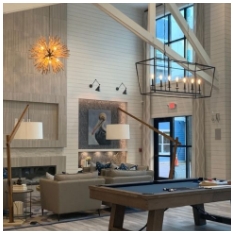
A pool table is a large piece of furniture, so its appearance can have a noticeable impact on the room.
Frame finish, leg design, cloth color, pocket style, and overall proportions should work with the surrounding furniture and interior finishes.
For a traditional room, a timber-style frame with leather-style pockets may suit the setting. In a more contemporary room, cleaner lines and a simpler finish may be more appropriate.
Design should not replace construction quality, but both factors can be considered together.
Conclusion
So, What Should You Look for When Buying a Pool Table Focus first on practical factors such as room dimensions, table size, playing surface, frame strength, cushions, cloth, pockets, and professional installation.
A pool table should fit comfortably within the available space while providing enough clearance for normal cue movement. Construction quality and correct levelling are also important for consistent play over time.
By assessing both playing requirements and room design before purchasing, you can choose a pool table that suits your available space, expected usage, and long-term needs.