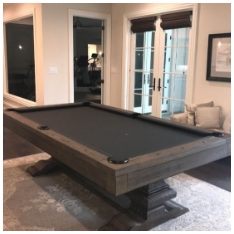
Buying a pool table can be a significant addition to a home, games room, club, or commercial entertainment space. With different sizes, materials, designs, and construction methods available, comparing options carefully can help you choose a table that suits both your space and how often you plan to use it.
If you are asking, what should you consider when looking at pool tables for sale, the answer involves more than comparing appearance and price. Table size, playing surface, frame construction, cushions, cloth quality, installation, and ongoing maintenance can all affect the playing experience.
Understanding these factors before purchasing can make it easier to narrow down suitable options.
Consider the Size of the Pool Table
Pool tables are available in several standard sizes. Common residential tables are usually around 7 or 8 feet long, while 9-foot tables are often associated with tournament-style play.
The right size depends on both personal preference and available room dimensions. It is important to measure more than the space occupied by the table itself. Players need enough clearance around every side to use a cue comfortably.
Measure the Room Before Buying
Measure the length and width of the room and consider the length of the cues you intend to use. A table that technically fits into the room may still feel cramped if players cannot take full shots comfortably.
Doorways, furniture, columns, and other obstacles should also be considered when deciding where the table will be positioned.
Check the Playing Surface
The playing surface has a major influence on how consistently balls roll across a pool table.
Many traditional pool tables use slate underneath the cloth. Slate provides a solid and level surface when it is installed correctly. Some lower-priced tables may use engineered wood or other manufactured materials instead.
Alternative playing surfaces can make a table lighter and easier to move, but the playing characteristics may differ from those of a slate table.
Understand Slate Thickness and Construction
Slate tables may use either a single-piece or multi-piece slate bed. Three-piece slate is common on many full-size tables because the sections can be transported more easily and levelled during installation.
When comparing pool tables for sale, ask what type of playing surface is used and whether professional levelling is recommended.

Look at the Frame and Cabinet Construction
A strong frame supports the weight of the playing surface and helps the table remain stable during use.
Pool table frames may be made from solid wood, engineered wood, metal, or a combination of materials. Heavier slate tables require particularly strong support underneath the playing surface.
Check the legs, support beams, cabinet joints, and overall construction. A table should remain steady when players lean against it or take a shot.
Examine Cushion and Rail Quality
The cushions fitted along the rails determine how the ball rebounds after contacting the sides of the table.
Consistent cushions help produce predictable rebounds. Poor-quality or worn cushions may cause balls to lose speed quickly or rebound at unexpected angles.
If you are considering a used pool table, test several cushions before purchasing. Balls should rebound consistently from different sections of the rails.
Consider the Pool Table Cloth
Pool table cloth affects ball speed, control, and overall playing conditions.
Different cloth materials and weaves are available. Some are designed for faster play, while others provide slightly more resistance. Wool blends are commonly used on many recreational tables, while worsted cloth is frequently associated with faster and more consistent ball movement.
The choice may depend on whether the table will mainly be used for casual games, regular practice, or competitive play.
Review the Table Style and Finish
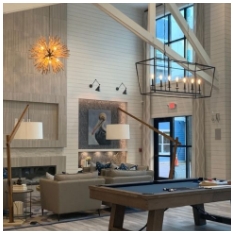
Pool tables are often large pieces of furniture, so their appearance can influence the overall look of a room.
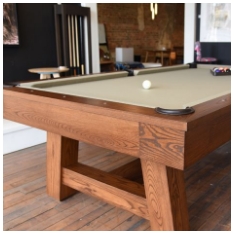
Traditional models may feature detailed wooden cabinets and carved legs, while contemporary tables often use simpler lines, neutral finishes, and modern materials.
Choose a design that suits the surroundings, but avoid making appearance the only deciding factor. Construction quality and playing characteristics should remain important considerations.
Compare New and Used Pool Tables
Both new and used tables can be worth considering depending on your budget and requirements.
A new pool table generally provides the benefit of unused components and clear manufacturer specifications. A used table may cost less, but its condition should be inspected carefully.
Check the cloth for tears or excessive wear, examine the cushions, inspect the frame for movement, and look for visible damage to the playing surface.
If a used slate table needs to be transported, remember that dismantling, moving, reassembly, and levelling can add to the overall cost.
Think About Delivery and Installation
Pool tables can be extremely heavy, particularly models that contain slate.
Before purchasing, find out whether delivery and installation are included. Professional installation can help ensure that the table is assembled correctly and that the playing surface is properly levelled.
Access to the room should also be checked in advance. Narrow staircases, small doorways, lifts, or tight corners may affect how the table can be moved into position.
Check the Included Accessories
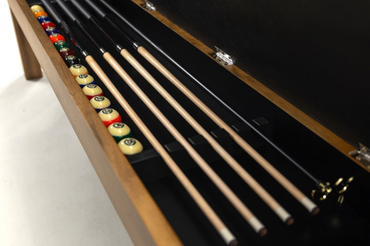
Some pool tables are sold with accessories such as cues, balls, a triangle rack, chalk, brushes, and cue racks.
Review exactly what is included before comparing prices between different tables. Accessories can be convenient, but their quality can vary.
Regular players may eventually prefer to purchase cues and other equipment separately according to their own preferences.
Consider Maintenance Requirements
Pool tables require occasional care to maintain consistent playing conditions.
The cloth should be brushed or cleaned according to the manufacturer's recommendations. Spills should be dealt with carefully, and heavy objects should not be placed on the playing surface.
Over time, the table may also require re-levelling, replacement cloth, or new cushions depending on how frequently it is used.
Final Thoughts
When asking, 'What Should You Consider When Looking at Pool Tables for Sale?, focus on how the table will be used, where it will be placed, and how it is constructed.
Room size, table dimensions, playing surface, cushions, cloth, frame quality, installation requirements, and maintenance all deserve consideration. Comparing these details rather than focusing only on price or appearance can help you select a pool table that suits your available space and preferred style of play.
Careful measurement and inspection before purchase can also reduce the chance of unexpected delivery, installation, or maintenance issues later.