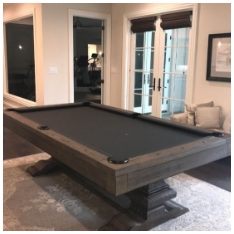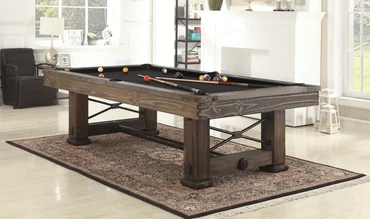
Pool tables have long been associated with game rooms, clubs, and dedicated recreation spaces. Traditional models are often recognised by heavy wooden construction, carved details, dark finishes, and a classic billiards-room appearance. Modern pool tables take a different approach, combining cleaner forms, updated materials, and designs that fit more naturally into contemporary interiors.
So, What Makes a Modern Pool Table Different From Traditional Designs? The main differences usually appear in the table’s shape, materials, finishes, proportions, and how easily it integrates into the surrounding room. While both styles are designed around the same game, their visual character and practical considerations can vary considerably.
Modern Pool Tables Use Cleaner, Simpler Lines
One of the most visible differences between modern and traditional pool tables is the overall shape.
Traditional pool tables often feature decorative legs, carved rails, thick timber frames, and ornamental detailing. Their design may reflect furniture styles from earlier periods, particularly those associated with formal billiards rooms.
Modern tables generally use straighter lines and simpler forms. The frame may appear slimmer, with fewer decorative elements and more emphasis on proportion.
Minimal Detailing Changes the Overall Appearance
A modern pool table does not necessarily need to look plain. Instead, visual interest often comes from the relationship between materials, finishes, and geometry rather than decorative carving.
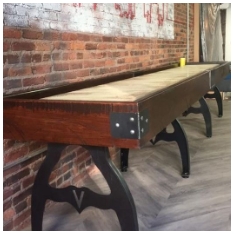
For example, a modern table may use an angular metal base, a clean rectangular frame, or a floating-style support structure. This can give the table a lighter appearance even when the internal construction remains substantial.

Materials Extend Beyond Traditional Solid Wood
Wood remains common in pool table construction, but modern designs often combine it with other materials.
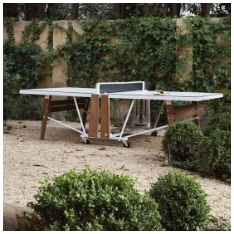
Metal, engineered wood, glass details, stone-inspired surfaces, and composite materials may be incorporated into the frame or decorative structure.
Traditional models typically rely more heavily on visible hardwood finishes such as mahogany, oak, walnut, or similar tones.
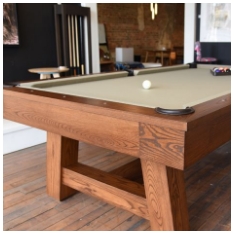
Modern tables may still use wood, but the finish is often lighter, smoother, or more restrained.
Material Combinations Create a Contemporary Look
A table with a timber playing frame and metal legs can feel very different from one built entirely from dark carved wood.
The same applies to tables with matte surfaces, powder-coated bases, or pale natural finishes. These combinations allow the table to coordinate more easily with contemporary furniture and architectural details.
Modern Designs Offer a Broader Range of Finishes
Traditional pool tables are commonly associated with darker finishes and green playing cloth, although other options have always existed.
Modern models tend to offer a wider range of visual combinations.
The frame may be finished in white, black, grey, natural oak, walnut, or muted neutral tones. Playing cloth may also be available in shades such as blue, charcoal, beige, burgundy, or other colours.
This flexibility can be useful when the table is part of a carefully planned interior rather than a separate game room.
Contemporary Pool Tables Are Often Designed as Furniture
A traditional pool table can become the dominant visual feature of a room. Modern designs are more likely to be developed with the surrounding furniture in mind.
Some tables resemble dining furniture, consoles, or architectural pieces when viewed from a distance.
This approach is especially relevant in open-plan homes where recreational furniture is visible from living or dining areas.
Convertible Designs Can Serve More Than One Purpose
Some modern pool tables can be fitted with removable tops that allow them to function as dining tables or work surfaces.
This does not change the requirements of the playing area, but it can make the table more practical in homes where a dedicated billiards room is not available.
Traditional designs can also be convertible, but multipurpose use is more closely associated with many contemporary models.
Base and Leg Designs Are More Experimental
Traditional pool table legs are usually positioned in familiar furniture-style arrangements. They may be turned, carved, tapered, or heavily structured.
Modern pool tables often experiment more with the base.
A table may use:
- Crossed metal legs
- Pedestal supports
- Angled frames
- Rectangular architectural bases
- Central support structures
- Slim geometric legs
These designs can make the table appear less bulky while still providing the support required for the playing surface.
Modern Tables Often Suit Open-Plan Interiors
The placement of a pool table has changed along with residential layouts.
A traditional table may feel most appropriate in a dedicated games room, study, club-style space, or traditional interior.
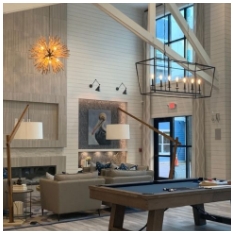
Modern tables are often designed for living rooms, open entertainment areas, lofts, contemporary basements, and multipurpose spaces.
Their cleaner appearance makes it easier to position them alongside modern sofas, dining furniture, lighting, and storage.
The Playing Requirements Remain Important
Although appearance differs, modern and traditional tables still need to provide a suitable playing experience.
The quality of the playing surface, cushions, cloth, frame construction, levelling system, and dimensions remains important regardless of style.
A modern-looking table should therefore be assessed on more than appearance alone.
Design Should Not Replace Construction Quality
A slim frame or unusual base may look appealing, but buyers should still consider stability, surface flatness, cushion response, and long-term durability.
The best design choice is one that provides the desired appearance while maintaining the structural requirements of a pool table.
Room Planning Can Influence the Better Choice
Choosing between a modern and traditional pool table often depends on the room rather than the game itself.
A traditional table may work well in an interior with timber panelling, classic furniture, leather seating, or decorative architectural details.
A modern pool table may be more appropriate where the room uses clean lines, neutral colors, contemporary lighting, and restrained furniture.
It is also important to measure the available space around the table so players have enough clearance to use cues comfortably.
Conclusion
Understanding What Makes a Modern Pool Table Different From Traditional Designs? involves looking beyond appearance. Modern tables generally feature cleaner lines, broader material choices, lighter or neutral finishes, geometric bases, and designs intended to integrate with contemporary living spaces.
Traditional pool tables remain suitable for interiors that favour classic furniture and decorative detailing, while modern models can work particularly well in open-plan and multipurpose rooms.
In either case, construction quality, playing dimensions, stability, and available room space should remain central to the decision. The most suitable pool table is one that supports proper play while fitting comfortably into the design and practical requirements of the room.