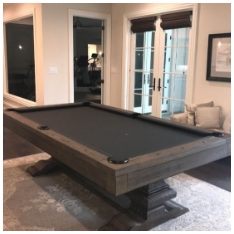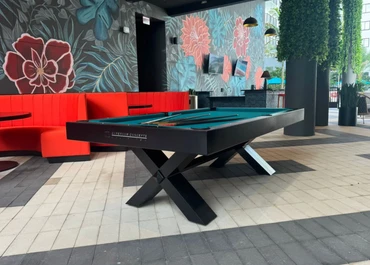
A pool table can serve as both a recreational feature and a permanent part of a room’s interior. Modern designs are expected to provide accurate gameplay while also fitting comfortably into contemporary homes, entertainment rooms, clubs, and hospitality spaces.
When considering what features a modern pool table should have, it is important to look beyond appearance. The quality of the playing surface, frame construction, cushions, cloth, pockets, levelling system, and overall dimensions can directly affect how the table performs over time.
A well-designed modern pool table should combine reliable playability with durable materials and practical features suited to its intended space.
A Strong and Stable Frame
The frame is one of the most important structural components of a pool table. It supports the playing surface and helps keep the table stable during regular use.
Modern pool tables are commonly built using solid wood, engineered wood, metal, or combinations of these materials. Regardless of the material, the frame should be strong enough to support the weight of the playing surface without bending or shifting.
Why Frame Stability Matters
A weak or poorly constructed frame can lead to an uneven playing surface over time. Even small structural changes can affect the direction and speed of the balls.
Look for tables with reinforced support beams, secure joints, and strong legs. Tables with larger playing surfaces may require additional internal support to distribute weight evenly.
A High-Quality Playing Surface
The playing bed has a major influence on the performance of a pool table.
Slate is widely used in higher-quality tables because it provides a smooth, flat, and stable surface. It is less likely to warp compared with some alternative materials.
Modern pool tables may use single-piece or multi-piece slate depending on their size and construction.
Non-slate surfaces can be lighter and more affordable, but their long-term consistency may vary depending on the quality of the material and the surrounding conditions.
Accurate Levelling System
A pool table must be level for balls to roll accurately.
Modern tables often include adjustable levelling feet that allow small changes to be made after installation. This is particularly useful when the flooring underneath the table is slightly uneven.
Some models also include internal levelling mechanisms beneath the playing surface.
A reliable levelling system allows the table to be adjusted without requiring major structural changes.
Responsive Cushions and Rails
The cushions around the playing surface determine how accurately balls rebound from the sides of the table.
High-quality cushions should provide consistent rebound across all rails. If one section reacts differently from another, it can make shots difficult to predict.
Natural or synthetic rubber is commonly used in cushion construction. The quality and shape of the cushion profile can influence both ball speed and rebound angles.
Check Rail Construction
The rails should also be firmly attached to the table. Loose rails can reduce cushion performance and produce inconsistent results.
Modern tables should have solid rail construction and secure fastening systems that remain stable with regular use.

Durable Pool Table Cloth
The cloth covering the playing surface affects ball speed, accuracy, and overall playing experience.
Pool table cloth is usually made from wool, nylon, or blended materials. Traditional woolen cloth can provide controlled ball speed, while worsted cloth is often smoother and faster.
The right choice depends on how the table will be used.
A table intended for frequent competitive-style play may benefit from faster cloth, while a home entertainment table may prioritise durability and ease of maintenance.
Well-Designed Pockets
Pocket design affects both gameplay and the appearance of a pool table.
Modern pool tables may include drop pockets, enclosed pockets, or internal ball-return systems. Drop pockets collect balls individually, while ball-return systems guide them toward a central collection area.
Pocket openings should be consistent across the table. Poorly aligned or uneven pockets can affect shot accuracy.
The pocket material should also be durable enough to withstand repeated contact with balls.
Appropriate Size for the Room
Modern pool tables are available in several sizes, commonly ranging from compact recreational models to larger tournament-style tables.
The playing surface is only one part of the space requirement. Players also need enough room around the table to use a cue comfortably.
Before purchasing a table, measure the room and consider the length of the cues that will be used.
A larger table may provide a more traditional playing experience, but a smaller table can be more suitable for homes where floor space is limited.
Contemporary Design and Finishes
A modern pool table does not need to look like a traditional games-room fixture.
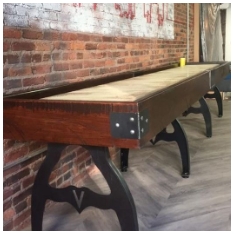
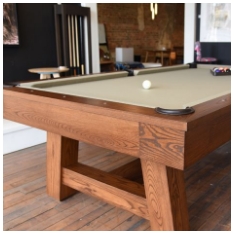
Many current designs feature clean lines, simple frames, slim profiles, metal details, or natural wood finishes. Neutral colors such as black, grey, walnut, oak, and white are commonly used to help the table fit into different interior styles.
Some tables are designed to resemble dining or conference tables when covered.
This can be useful in spaces where furniture needs to serve more than one purpose.
Consider the Room as a Whole
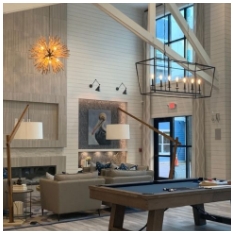
The pool table should work with the surrounding flooring, lighting, furniture, and wall finishes.
A highly decorative table may suit a traditional interior, while a minimal table with straight lines can fit more naturally into a modern setting.
Built-In Storage Options
Storage can make a pool table area easier to organise.
Some modern tables include built-in compartments or drawers for cues, balls, chalk, brushes, and other accessories. Others are available with matching cue racks or wall-mounted storage units.
Integrated storage can be especially useful in smaller rooms where additional furniture would take up valuable space.
Convertible or Multi-Purpose Features
Some modern pool tables are designed for more than one activity.
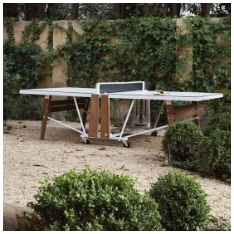
Dining tops, table tennis surfaces, and removable covers can allow the table to serve several purposes. A convertible design may be useful in apartments, family rooms, entertainment spaces, or homes without a dedicated games room.
However, the conversion mechanism should be secure and should not compromise the quality of the playing surface.
Quality Accessories
A complete pool table setup should include suitable accessories.
These may include:
- Pool cues
- Ball sets
- Triangle or diamond racks
- Chalk
- Table brushes
- Protective covers
- Cue storage
Accessories do not necessarily need to be included with the table, but their quality should match the intended level of play.
Easy Maintenance and Long-Term Durability
A modern pool table should be designed for practical maintenance.
The cloth should be easy to brush and clean, while the frame and rails should have finishes that resist normal wear. Replaceable cushions and cloth can also extend the usable life of the table.
A protective cover is useful for limiting dust, sunlight exposure, and accidental spills when the table is not being used.
Conclusion
So, What Features Should a Modern Pool Table Have? A well-designed table should include a stable frame, level playing surface, responsive cushions, durable cloth, properly aligned pockets, and a reliable levelling system.
Room size, table dimensions, storage, design, and multi-purpose functionality should also be considered before making a decision. Rather than choosing a table based only on appearance, evaluating its construction and playing characteristics can help ensure that it remains practical, comfortable to use, and suitable for the surrounding interior over the long term.