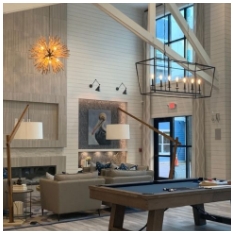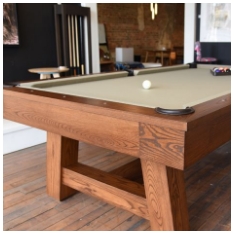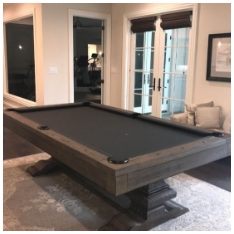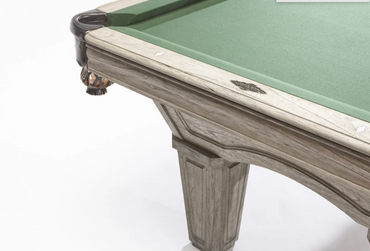
Choosing the right pool table is about more than just size and slate quality. The type of wood used in the table’s construction plays a major role in its durability, appearance, and overall value. Understanding the differences between common wood options can help buyers make an informed decision that suits both their playing needs and interior design preferences. Types of Wood for Pool Tables: Walnut vs. Oak vs. Cherry vs. Mahogany, focusing on strength, visual appeal, maintenance, and suitability for different settings.
Why Wood Choice Matters in Pool Tables
The wood used for a pool table frame, legs, and rails provides structural support and influences how the table ages over time. High-quality hardwoods resist warping, support heavy slate beds, and maintain alignment for consistent gameplay. Beyond performance, wood also defines the table’s finish, color, and style, making it a central design element in game rooms.

Common Types of Wood Used for Pool Tables
Walnut
Characteristics of Walnut Wood
Walnut is a premium hardwood known for its rich, dark brown tones and smooth grain patterns. It offers a refined and elegant appearance that works well in formal interiors.
Benefits of Walnut Pool Tables
- Strong and stable structure
- Naturally resistant to minor dents
- Ages well with proper care
Walnut is often chosen for custom or high-end pool tables where visual appeal is a priority. Its darker color helps conceal minor wear, making it suitable for long-term use.
Considerations
Walnut is typically more expensive than oak or cherry. It may not be the best choice for buyers on a strict budget.
Oak
Characteristics of Oak Wood
Oak is one of the most widely used woods for pool tables. It has a pronounced grain pattern and a lighter color compared to walnut and mahogany.
Benefits of Oak Pool Tables
- Extremely durable and hard
- Supports heavy slate effectively
- Widely available and cost-effective
Oak pool tables are common in both home and commercial settings due to their strength and affordability. They are well-suited for frequent play.
Considerations
The bold grain of oak may not appeal to those seeking a smoother or more refined finish. Oak can also show scratches more easily than darker woods.
Cherry
Characteristics of Cherry Wood
Cherry wood is known for its warm reddish tones that deepen over time. It has a fine, even grain that gives pool tables a polished and classic look.
Benefits of Cherry Pool Tables
- Smooth texture with minimal grain distraction
- Develops richer color as it ages
- Complements traditional interiors
Cherry is often selected for residential game rooms where aesthetics are as important as function.
Considerations
Cherry is slightly softer than oak and walnut, which means it may dent more easily with heavy use. It also tends to be priced in the mid-to-high range.
Mahogany
Characteristics of Mahogany Wood
Mahogany is a classic choice associated with luxury furniture. It features deep reddish-brown hues and a straight, uniform grain.
Benefits of Mahogany Pool Tables
- Excellent dimensional stability
- Smooth surface ideal for detailed finishes
- Long-lasting and resistant to warping
Mahogany pool tables are often found in upscale settings and are valued for their timeless appearance.
Considerations
Mahogany is one of the more expensive options and may require regular maintenance to preserve its finish and color.
Comparing Walnut, Oak, Cherry, and Mahogany
Durability and Strength
Oak ranks highest in hardness, making it ideal for heavy play. Walnut and mahogany offer excellent stability, while cherry is best suited for moderate use.
Appearance and Style
- Walnut: Dark, elegant, and modern
- Oak: Light, traditional, and bold-grained
- Cherry: Warm, classic, and smooth
- Mahogany: Rich, formal, and timeless
Maintenance Requirements
All hardwood pool tables require regular dusting and protection from humidity. Darker woods like walnut and mahogany tend to hide minor scratches better than lighter oak.

Choosing the Right Wood for Your Pool Table
When selecting among the Types of Wood for Pool Tables: Walnut vs. Oak vs. Cherry vs. Mahogany, consider the following factors:
Usage Frequency
For frequent or competitive play, oak or walnut offers superior durability. For occasional home use, cherry or mahogany can be excellent choices.
Room Design
Match the wood tone with existing furniture and flooring. Dark woods suit formal or modern rooms, while lighter woods fit casual spaces.
Budget
Oak is generally the most budget-friendly option, while walnut and mahogany fall into the premium category.
Final Thoughts
The wood used in a pool table affects more than just appearance. It determines how well the table supports gameplay, how long it lasts, and how it fits into your space. By understanding the differences between walnut, oak, cherry, and mahogany, buyers can confidently choose a pool table that balances performance, style, and long-term value.
Selecting the right wood ensures that your pool table remains both a functional game piece and a lasting centerpiece in your home or entertainment area.