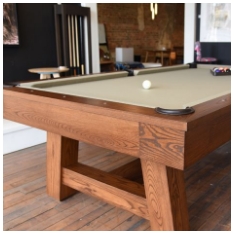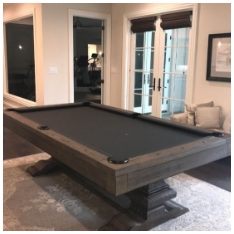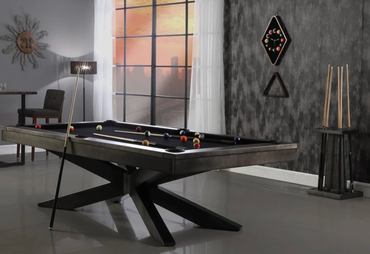
A pool table may appear simple at first glance, but its construction involves several carefully designed components. The playing surface, cushions, rails, pockets, frame, and cloth all contribute to how the table performs. Alongside these structural elements, equipment such as cues, balls, racks, chalk, and maintenance tools also affects the playing experience.
Understanding The Anatomy of a Pool Table: From Pool Cues to Premium Pool Accessorie can help players recognise how each component works and why proper equipment selection and maintenance matter. Whether a table is installed in a home games room or a commercial setting, knowing its basic structure makes it easier to care for the equipment and maintain consistent playing conditions.
Understanding the Main Parts of a Pool Table
A pool table consists of more than a flat surface supported by four legs. Beneath the cloth are structural components designed to provide stability, level play, and predictable ball movement.
Although construction methods can vary between tables, most traditional pool tables share several fundamental parts.
The Slate Playing Surface
Slate is the solid surface positioned beneath the pool table cloth. It provides the flat and consistent base required for accurate ball movement.
Many full-size tables use multiple pieces of slate that are carefully levelled during installation. Any unevenness can affect the direction and speed of the balls, making correct installation important.
The slate is supported by the table frame, which must be strong enough to carry its considerable weight without shifting or bending.
Pool Table Cloth
The visible playing surface is covered with a specialised fabric commonly referred to as pool table cloth or felt. It is typically made from wool, nylon, or a blend of materials.
The condition and type of cloth can influence ball speed and movement. A smooth, properly fitted cloth allows the balls to travel consistently, while worn or damaged fabric may interfere with play.
Regular brushing can help remove chalk dust and other particles that collect on the surface.

Rails and Cushions
Rails form the raised edges surrounding the playing area. Attached to the inside of these rails are cushions made from resilient rubber.
Cushions allow balls to rebound after contacting the sides of the table. Their shape, condition, and installation can affect rebound angles and speed.
Why Cushion Condition Matters
Pool table cushions naturally deteriorate over time. Exposure to temperature changes, age, and frequent use can gradually reduce their responsiveness.
If balls begin rebounding inconsistently or lose speed quickly after contacting a cushion, the rubber may require inspection. Maintaining the cushions helps preserve predictable play across the table.
Pockets and Pocket Liners
Most pool tables have six pockets: one at each corner and one in the middle of each long side.
Depending on the table design, pockets may use leather, rubber, plastic, or other materials. Some tables feature drop pockets that hold balls beneath each opening, while commercial tables may use an internal ball-return system.
Pocket dimensions also influence gameplay because the opening determines how accurately a ball must be played to enter the pocket.
The Pool Table Frame and Legs
The frame provides structural support for the entire table. Because slate can be extremely heavy, the frame must remain stable and level.
Table legs support this structure and may include adjustable levellers. These allow small height adjustments to compensate for uneven flooring.
A level table is essential because even a slight slope can cause slow-moving balls to drift away from their intended path.
Understanding Pool Cues
The cue is the player's primary piece of equipment. It is used to strike the cue ball and control speed, direction, and spin.
Pool cues are commonly made from wood, although composite and other engineered materials are also available.
Main Parts of a Pool Cue
A typical cue consists of a butt, shaft, ferrule, and tip. The butt provides the main grip area, while the shaft extends towards the cue ball.
The ferrule sits between the shaft and cue tip, providing support during impact. The tip is the small contact surface that actually strikes the cue ball.
Cue tips require occasional maintenance because their shape and condition can affect contact with the ball.
Pool Balls and Their Role
Pool balls are manufactured to specific dimensions and weights to support consistent play. A standard set generally includes numbered object balls and a separate cue ball.
Balls should be kept clean because dirt, chalk, and oils can accumulate on their surfaces. This buildup may affect how smoothly they travel across the cloth.
Using suitable ball-cleaning products can help maintain their appearance and playing characteristics.
Essential Pool Table Accessories
Several accessories support both gameplay and equipment maintenance.
Cue chalk is one of the most familiar examples. Applying chalk to the cue tip helps increase friction between the tip and cue ball, reducing the likelihood of an unintended slip during a shot.
Racks are another basic accessory. Depending on the game, players may use a triangular rack or a diamond-shaped rack to arrange the balls before play begins.
Maintenance Accessories
A pool table brush helps remove chalk particles and surface debris from the cloth. Table covers can protect the playing surface from dust, sunlight, spills, and other environmental factors when the table is not being used.
Cue racks provide organised storage and help prevent cues from being left against walls, where they may fall or become damaged.
Other useful accessories may include replacement cue tips, tip-shaping tools, bridge cues, ball trays, and table-cleaning products.
Choosing Accessories for Your Pool Table
Accessories should be selected according to the table type, frequency of use, and playing environment.
For casual home use, a reliable set of cues, balls, chalk, racks, and cleaning equipment may be sufficient. Tables that receive frequent use may benefit from additional cues, replacement tips, protective covers, and dedicated storage.
Quality should also be considered alongside price. Accessories that are compatible with the table and maintained correctly can provide more consistent performance over time.
Final Thoughts
Learning The Anatomy of a Pool Table From Pool Cues to Premium Pool Accessories provides a clearer understanding of how the table and its equipment work together. Slate creates a level foundation, cloth provides the playing surface, cushions control rebounds, and the frame supports the complete structure.
Pool cues, balls, chalk, racks, covers, and maintenance tools also contribute to regular gameplay and equipment care. By understanding these components and maintaining them appropriately, players can keep a pool table in suitable playing condition while creating a more organised and consistent environment for each game.