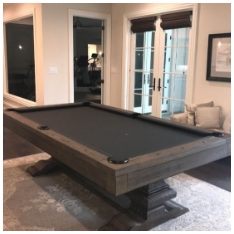
Installing a snooker or pool table requires more planning than simply measuring the table itself. Players need enough surrounding space to hold, position and move a cue comfortably from every side. A room that is too small may restrict shots, affect gameplay and make the table difficult to use.
This Snooker And Pool Table Room Size Guide explains how to calculate the right room dimensions based on table size, cue length and available clearance. It also covers practical considerations such as lighting, furniture placement and room layout.
Why Room Size Matters for Snooker and Pool Tables
A snooker or pool table should have sufficient open space around all four sides. Most standard cues are between 48 and 58 inches long. During play, the cue must extend behind the player without hitting a wall, chair or cabinet.
Limited space can create several problems:
- Players may be unable to take a full backswing.
- Certain shots may require a shorter cue.
- Walls and nearby furniture can be damaged.
- Movement around the table may feel uncomfortable.
- The overall playing experience may be affected.
The ideal room size is calculated by adding twice the cue length to both the table length and width.
Basic Room Size Formula
Use the following calculation:
Minimum room length = Table length + twice the cue length
Minimum room width = Table width + twice the cue length
For example, if a pool table measures 7 feet by 3 feet 6 inches and players use 58-inch cues, approximately 116 inches must be added to both dimensions. This gives enough room for cue movement on every side.

Recommended Room Sizes for Pool Tables
Pool tables are available in several sizes, with 7-foot, 8-foot and 9-foot models being the most common. The measurements below are based on standard 58-inch cues.
Room Size for a 7-Foot Pool Table
A typical 7-foot table has a playing surface of approximately 78 inches by 39 inches.
The recommended minimum room size is around:
16 feet 2 inches × 12 feet 11 inches
This table size is commonly selected for home game rooms, smaller recreational areas and spaces where a full-size table may not fit.
Room Size for an 8-Foot Pool Table
An 8-foot pool table generally has a playing area measuring approximately 88 inches by 44 inches.
The minimum room size should be approximately:
17 feet × 13 feet 4 inches
An 8-foot model offers a balance between space requirements and playing comfort. It is often suitable for dedicated game rooms and larger living areas.
Room Size for a 9-Foot Pool Table
A regulation 9-foot pool table normally has a playing surface of about 100 inches by 50 inches.
The recommended room size is around:
18 feet × 13 feet 10 inches
This size is commonly used for competitive play and requires a more spacious room.
Recommended Room Sizes for Snooker Tables
Snooker tables are generally larger than standard pool tables. A full-size competition snooker table measures 12 feet by 6 feet externally, with a playing surface of approximately 11 feet 8.5 inches by 5 feet 10 inches.
When using a standard 58-inch cue, the recommended room size for a full-size snooker table is approximately:
22 feet × 16 feet
Smaller snooker tables are also available for residential spaces. A 10-foot snooker table generally requires a room of about 20 feet by 15 feet, while an 8-foot table may fit in a room measuring approximately 17 feet by 13 feet 6 inches.
Exact requirements may vary depending on the table manufacturer and cue length. Always check the product dimensions before preparing the room.
What to Do When the Room Is Slightly Too Small
A room that falls a few inches short may still accommodate a table, but compromises may be necessary. Short cues can be used for shots taken close to walls or structural obstacles.
Common short cue sizes include:
- 48-inch cues
- 42-inch cues
- 36-inch cues
Short cues can make occasional restricted shots possible, but they should not replace adequate room clearance on every side. If several areas require short cues, selecting a smaller table may provide a better long-term playing experience.
Consider Obstacles Beyond the Walls
Room measurements should also account for:
- Support columns
- Doors and door swings
- Radiators
- Built-in shelves
- Cabinets and seating
- Low ceilings
- Staircases or raised flooring
Measure the usable open space rather than relying only on the room’s total dimensions.
Lighting and Furniture Placement
Proper lighting improves visibility across the playing surface. A dedicated table light should be centred above the table and positioned high enough to prevent interference with players.
The fixture should distribute light evenly without creating strong shadows or glare. Pendant-style billiard lights and linear LED fittings are commonly used.
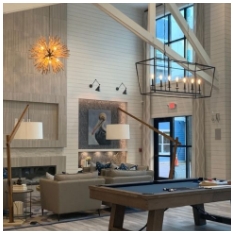
Furniture should be placed outside the cueing area. Wall-mounted cue racks, compact benches and narrow side tables can help preserve floor space. Avoid placing chairs directly behind the shooting position unless the room provides additional clearance.
Measuring the Room Before Buying a Table
Start by measuring the room’s clear length and width. Remove the dimensions occupied by fixed objects and note any narrow sections.
Next, confirm the table’s external dimensions and playing-surface measurements. Manufacturers may describe table sizes differently, so the exact product specification is important.
Mark the proposed table position on the floor using masking tape. Then extend a cue from each side to check whether walls or objects restrict movement. This simple step provides a realistic view of how the table will fit.
Conclusion
The correct room size depends on the table dimensions, cue length, and surrounding obstacles. A standard pool table generally requires at least five feet of clearance around the playing surface, while full-size snooker tables need considerably more space.
Accurate measurements, suitable lighting, and careful furniture placement help create a practical room where players can move freely and take shots comfortably. Planning these details before purchasing a table can prevent costly installation problems and ensure the space remains enjoyable to use.