Table shuffleboard is a classic indoor game that combines precision, control, and strategic thinking. Whether you are playing casually at home or in a competitive setting, understanding the rules and scoring system is essential. This guide explains how to play table shuffleboard in a clear, structured manner so beginners and intermediate players can improve their performance with confidence.
What Is Table Shuffleboard?
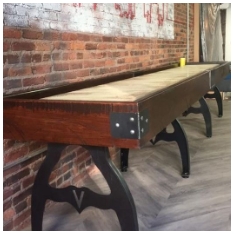
Table shuffleboard is played on a long, smooth wooden table where players slide weighted pucks, also called weights, toward a scoring area at the opposite end. The goal is to land your pucks in higher-scoring zones while preventing your opponent from scoring.
Unlike floor shuffleboard, table shuffleboard requires precise hand control and awareness of momentum. The surface is lightly sprinkled with silicone beads to reduce friction, allowing the pucks to glide smoothly.
Equipment Needed to Play
Before learning How to play table shuffleboard, it is important to understand the equipment involved.
Shuffleboard Table
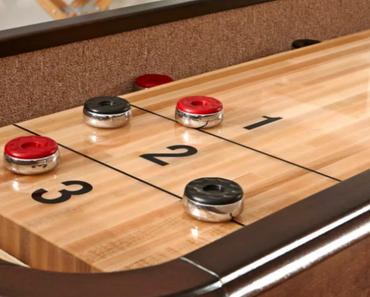
The table is typically 9 to 22 feet long. At the far end, you will see scoring zones marked with numbers such as 1, 2, and 3.
Pucks (Weights)
Each player or team uses four pucks of a specific color. A standard game includes eight total pucks.
Silicone Beads
These beads are spread on the table surface to help the pucks slide evenly and maintain consistent speed.

Basic Objective of the Game
The primary objective is to slide your pucks into the highest scoring zones without falling off the table. Only the player or team with the puck closest to the end of the table scores points during a round.
Understanding positioning and defensive play is a key part of learning How to Play Table Shuffleboard effectively.
Rules of Table Shuffleboard
Here are the standard rules followed in most casual and competitive games:
- Starting the Game
Players flip a coin or use another method to decide who shoots first. Players alternate shots until all eight pucks have been played.
- Shooting the Puck
Each puck must be released by hand and slide smoothly down the table. The puck must cross the foul line closest to the shooter to remain in play.
- Staying on the Table
If a puck falls off the table or does not cross the foul line, it is removed from play for that round.
- Alternating Shots
Players take turns sliding one puck at a time until all pucks are used.
How Scoring Works
Scoring is simple once you understand the layout of the table.
Scoring Zones
The far end of the table contains numbered sections. The puck must fully cross a line to earn that zone’s points. For example:
- 1 point zone
- 2 point zone
- 3 point zone
If a puck hangs slightly over the edge without falling, it may earn additional points depending on house rules.
Only One Player Scores Per Round
After all pucks are played, only the player or team with the puck closest to the end scores. They earn points for each puck that is closer than the opponent’s nearest puck.
For example, if you have two pucks closer to the edge than your opponent’s best puck, you score for both.
Games are usually played to 15 or 21 points.
Basic Strategies for Beginners
Learning How to Play Table Shuffleboard involves more than just sliding the puck. Strategy plays a major role in winning consistently.
Control Speed and Force
Applying the right amount of force is essential. Too much force sends the puck off the table. Too little leaves it short of scoring zones.
Use Defensive Shots
You can knock your opponent’s puck out of scoring position. Defensive shots are common when protecting a high-scoring puck.
Block Strategic Areas
Positioning your puck in front of a scoring zone can make it harder for your opponent to land a high-value shot.
Aim for Hanging Shots
A puck that slightly hangs over the end of the table can earn maximum points under certain rules. However, this requires precision.
Common Mistakes to Avoid
When learning How to Play Table Shuffleboard, beginners often make similar mistakes:
- Applying inconsistent force
- Ignoring defensive positioning
- Focusing only on high-point zones
- Rushing shots without planning
Taking time to observe the table conditions and your opponent’s approach can significantly improve results.
Practice Tips to Improve Accuracy
Improvement comes with consistent practice. Here are practical methods to refine your technique:
Practice Distance Control
Focus on landing pucks consistently in the same scoring zone.
Study Table Conditions
Different tables may slide faster or slower depending on surface condition and bead distribution.
Watch Opponent Strategy
Understanding how others approach shots can help you adapt your tactics.
Develop a Consistent Release
Use the same stance and release motion to maintain control.
Why Table Shuffleboard Remains Popular
Table shuffleboard continues to attract players of all ages because it is simple to learn yet challenging to master. The combination of skill, strategy, and steady hand control makes it engaging in both casual and competitive environments.
Understanding How to Play Table Shuffleboard provides the foundation needed to enjoy the game fully and improve steadily over time.
Conclusion
Table shuffleboard is a precision-based game that rewards patience, control, and thoughtful strategy. By learning the rules, understanding the scoring system, and practicing consistent technique, players can steadily enhance their performance.
If you are new to the game, focus first on mastering basic control and scoring rules. With regular practice and strategic awareness, your ability to compete confidently will improve.
Now that you understand How to Play Table Shuffleboard, you can approach the table prepared and ready to compete with clarity and skill.