Choosing the right pool cue is not just about appearance or price. It directly affects your control, accuracy, and overall performance on the table. Whether you are a beginner or an experienced player, understanding how to pick a pool cue that fits your style can help you play more consistently and comfortably. explains the key factors to consider when selecting a pool cue, helping you match the cue to your playing style and preferences.
Why Choosing the Right Pool Cue Matters
A pool cue is an extension of your playing technique. The wrong cue can lead to poor control, inconsistent shots, and discomfort during long sessions.
When you learn how to pick a pool cue that fits your style, you improve:
- Shot precision
- Cue ball control
- Stroke consistency
- Overall confidence
A well-matched cue allows you to focus on strategy instead of adjusting your grip or stance repeatedly.
Key Factors to Consider When Choosing a Pool Cue
Cue Weight
Cue weight plays a major role in how you strike the ball.
- Light cues (17–18 oz): Better for finesse and control
- Medium cues (19 oz): Balanced performance for most players
- Heavy cues (20–21 oz): More power but less control
Most players prefer a 19 oz cue as it offers a balance between control and force.
Cue Length
Standard pool cues are typically 57–58 inches long. However, your height and playing posture should guide your choice.
- Shorter players may prefer slightly shorter cues
- Taller players may benefit from extended-length cues
Comfortable reach and proper stance are essential when deciding how to pick a pool cue that fits your style.
Tip Size and Material
The cue tip is the only part that makes contact with the ball, so it greatly impacts performance.
- Soft tips: Better spin and control but wear out faster
- Medium tips: Balanced durability and control
- Hard tips: Longer-lasting with more power but less spin
Tip diameter also matters:
- Smaller tips (11–12 mm): Greater precision
- Larger tips (12.5–13 mm): More forgiving for beginners
Shaft Type
The shaft influences how the cue delivers energy to the ball.
- Standard shafts: Traditional feel and performance
- Low-deflection shafts: Reduce cue ball deviation, improving accuracy
Players aiming for consistent accuracy often prefer low-deflection shafts.
Cue Material
Most cues are made from wood, but the type of wood affects performance.
- Maple: Common, durable, and consistent
- Ash: Offers a slightly different feel with visible grain
Some modern cues include carbon fiber shafts, which provide durability and reduced deflection.
Grip and Wrap
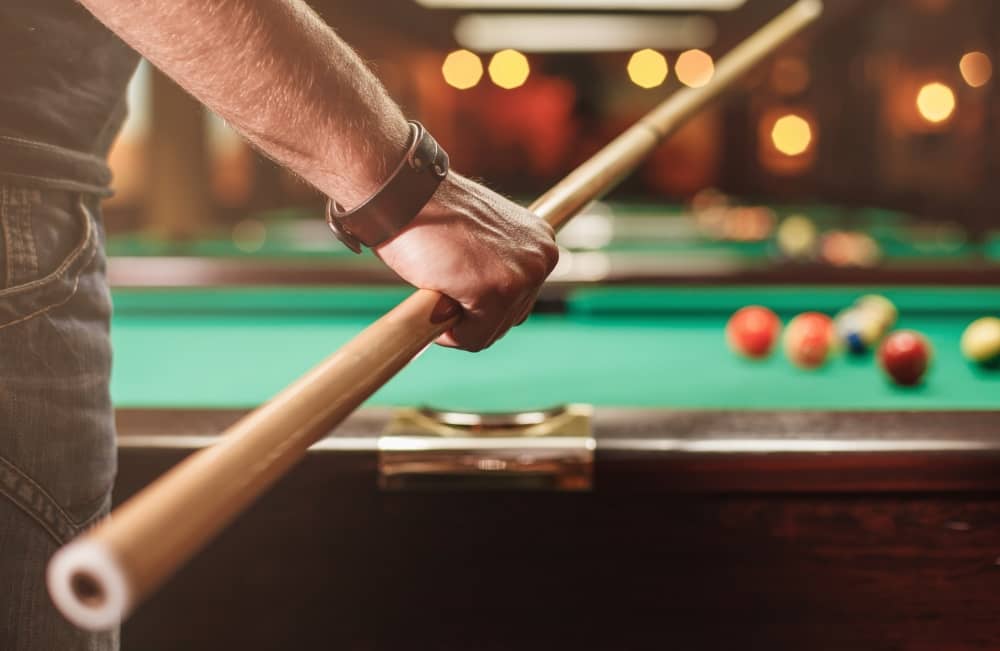
The grip determines how comfortable the cue feels in your hand.
- Irish linen wrap: Traditional and slightly textured
- Leather wrap: Smooth and firm
- Wrapless cues: Direct wood feel
Choose a grip that prevents slipping and supports a steady stroke.
Matching the Cue to Your Playing Style
Understanding your playing style is essential when deciding how to pick a pool cue that fits your style.
For Beginners
- Choose a medium-weight cue (around 19 oz)
- Opt for a larger tip for forgiveness
- Focus on comfort and control
Beginners should prioritize ease of use over advanced features.
For Intermediate Players
- Experiment with tip hardness and shaft types
- Consider low-deflection shafts for improved accuracy
- Look for better balance and customization
At this stage, refining technique becomes more important.
For Advanced Players
- Select cues based on precise performance needs
- Customize weight, balance, and tip
- Invest in high-quality materials
Experienced players benefit from cues tailored to their exact playing style.
Balance and Feel
Balance refers to how weight is distributed across the cue. Some cues are front-heavy, while others are rear-weighted.
- Forward-balanced cues: Offer more power
- Rear-balanced cues: Provide better control
Testing different cues helps you understand what feels natural. The right balance improves stroke consistency and reduces fatigue.
Budget Considerations
Pool cues are available across a wide price range. However, a higher price does not always guarantee better performance.
- Entry-level cues: Suitable for beginners
- Mid-range cues: Good balance of quality and price
- Premium cues: Advanced features and materials
When learning how to pick a pool cue that fits your style, focus on value rather than brand alone.
Testing Before Buying
Whenever possible, test a cue before purchasing. Pay attention to:
- Comfort in your grip
- Smoothness of the stroke
- Accuracy during shots
A cue that feels right in your hands is often the best choice, regardless of specifications.
Conclusion
Understanding how to pick a pool cue that fits your style requires attention to weight, tip, shaft, and overall feel. The right cue supports your technique, improves accuracy, and enhances your confidence at the table.
Instead of focusing only on price or appearance, prioritize comfort, balance, and compatibility with your playing style. With the right choice, you can improve your performance and enjoy the game more consistently.