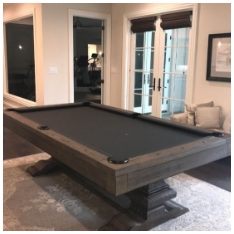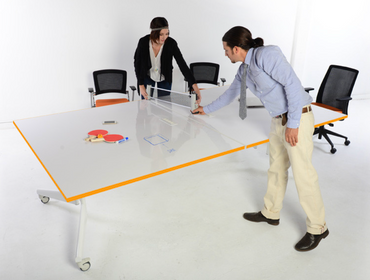
A ping pong table can provide hours of entertainment, exercise, and friendly competition for people of different age groups. However, choosing the right table involves more than selecting an attractive model or purchasing the first option within your budget. Table size, playing surface, frame strength, available space, storage requirements, and intended use can all affect your experience.
Understanding How to Choose the Perfect Ping Pong Table for Your Home can help you select a table that fits your room, playing style, and long-term requirements. Whether you are planning a dedicated games room or need a foldable table for occasional use, the following factors can guide your decision.
Measure the Available Space
Before comparing table models, measure the room or area where you plan to place the table. A regulation-size ping pong table is approximately 9 feet long, 5 feet wide, and 2.5 feet high. However, players also need enough space around the table to move comfortably.
Ideally, allow several feet of open space behind each end and on both sides. Competitive players may require more room because they often stand farther from the table during rallies. For casual family games, a smaller playing area may be manageable, but movement should not be restricted by walls, furniture, or other objects.
Consider Compact Tables for Smaller Rooms
A full-size table may not suit an apartment, bedroom, garage, or multipurpose room. Compact and midsize tables can be practical alternatives when space is limited. These tables are smaller than regulation models but still provide an enjoyable playing experience.
Some compact tables fold into separate halves, making them easier to carry and store. Before purchasing, check both the playing dimensions and the folded dimensions to ensure the table fits your available storage area.
Choose Between Indoor and Outdoor Tables
Ping pong tables are generally designed for either indoor or outdoor use. Selecting the correct type is important because the construction materials differ.
Indoor tables usually have wood-based playing surfaces that provide a consistent bounce. They work well in games rooms, basements, garages, and other dry indoor spaces. However, moisture, humidity, and direct sunlight can damage the surface over time.
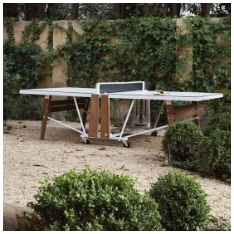
Outdoor tables use weather-resistant materials such as aluminium composite, treated resin, or melamine. Their frames are also designed to resist rust and moisture. Although outdoor tables may cost more, they are better suited to patios, terraces, gardens, and open garages.
Avoid Using Indoor Tables Outside
An indoor table should not be stored outdoors, even when covered. Changes in temperature and humidity can cause the tabletop to warp, swell, or lose its smooth finish. If the table will regularly be exposed to outdoor conditions, choose a model specifically labelled for outdoor use.
Check the Tabletop Thickness
Tabletop thickness has a direct effect on ball bounce and playing consistency. Thicker surfaces generally produce a more reliable bounce and a better overall playing experience.
Entry-level tables often have thinner tops that may suit children, beginners, and occasional recreational play. Mid-range tables provide improved bounce and are suitable for regular home use. Tournament-level tables usually have thicker surfaces designed for serious practice and competitive matches.
For most households, a medium-thickness tabletop offers a practical balance between performance and price. Check the product specifications rather than relying only on the table’s appearance.
Review the Frame and Leg Construction
A stable frame helps keep the table level during play. Look for strong steel legs, secure locking mechanisms, and reinforced supports under the tabletop. Weak frames may shake, shift, or become uneven after repeated use.
Adjustable leg levellers are useful when the floor is not completely flat. They allow you to balance the table and maintain an even playing surface. This feature can be particularly helpful in garages, basements, and outdoor areas.
Look for safety locks.
Foldable tables should include reliable safety locks that prevent the tabletop from opening or closing unexpectedly. This is especially important in homes with children. Corner protectors can also reduce the risk of injury from sharp edges.
Decide Whether You Need a Foldable Table
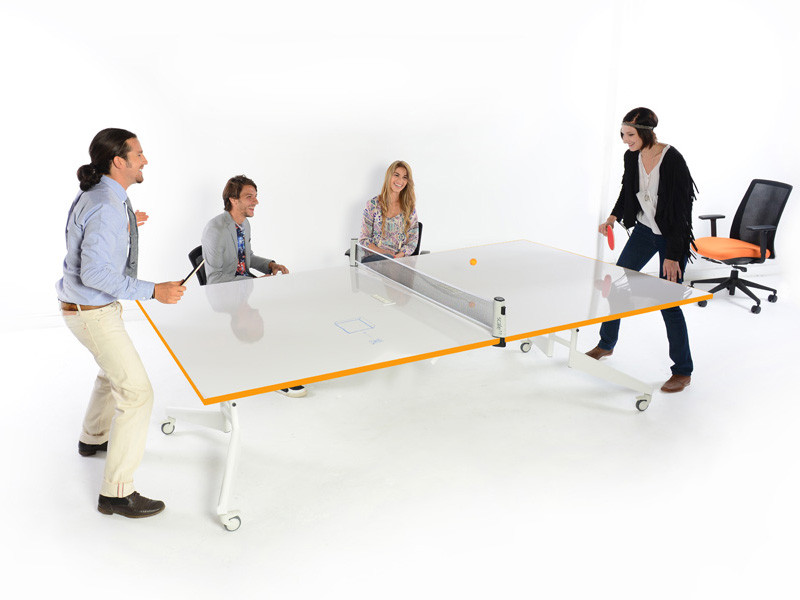
A foldable ping pong table is useful when the room serves multiple purposes. After playing, the table can be folded and moved to create more floor space.
Many foldable models include wheels for easier movement. Check whether the wheels lock securely when the table is in use. Larger wheels may be easier to move across uneven floors or door thresholds.
Some tables also support playback mode, where one half is folded upright. This allows an individual player to practise by hitting the ball against the raised section. Playback mode can be useful when a playing partner is unavailable.
Examine the Net and post system.
Some tables include a net and post set, while others require these accessories to be purchased separately. A removable net may be easier to adjust or replace, while a fixed net can make setup faster.
Look for a net system with adjustable height and tension. A loose or uneven net can affect gameplay. Clamp-style systems are often convenient because they can be attached and removed without damaging the table.
Consider the Main Users
Your choice should reflect who will use the table and how often it will be played. A lightweight, compact table may be suitable for children and occasional family games. Regular players may benefit from a stronger frame, thicker surface, and improved wheel system.
Serious players should prioritise consistent bounce, regulation dimensions, strong undercarriage support, and accurate surface markings. However, professional-level specifications may not be necessary for casual home entertainment.
Set a Practical Budget
Ping pong table prices vary according to size, materials, surface thickness, frame quality, brand, and additional features. Set a budget after identifying your essential requirements.
Avoid choosing a table solely because it has the lowest price. An inexpensive model may offer limited stability, a thinner playing surface, or weaker folding components. At the same time, there is no need to pay for tournament-level features if the table will only be used occasionally.
Compare warranties, replacement part availability, delivery charges, and assembly requirements before making a final decision.
Check Assembly and Delivery Requirements
Full-size ping pong tables can be heavy and difficult to transport. Review the packaged dimensions and weight before ordering. Make sure the package can pass through doors, stairways, lifts, and hallways.
Some tables arrive almost fully assembled, while others require several components to be attached. Check whether professional assembly is available or whether two people will be needed to complete the setup safely.
Conclusion
Choosing the right ping pong table requires careful consideration of room size, table dimensions, surface thickness, frame quality, storage, safety, and intended use. Indoor tables are suitable for dry, protected spaces, while outdoor models are designed to handle moisture and changing weather conditions.
A well-chosen table should fit comfortably within your home, remain stable during play, and provide a consistent ball bounce. By comparing practical features instead of focusing only on price or appearance, you can select a ping pong table that supports enjoyable play for years to come.