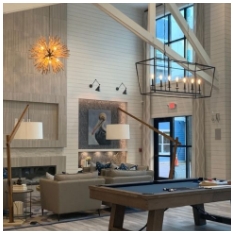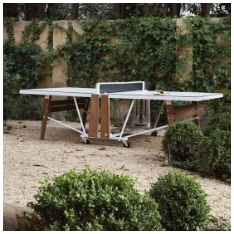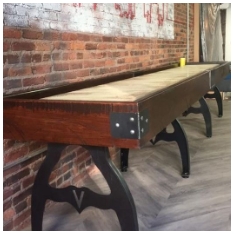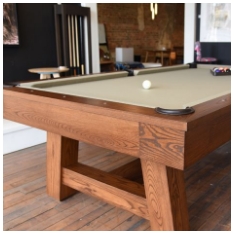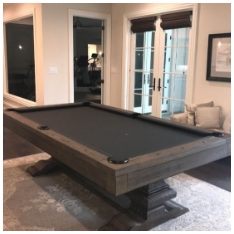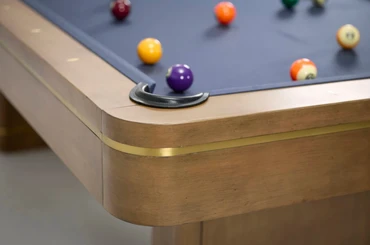
A pool table can be a strong addition to a game room, entertainment area, or dedicated recreation space, but choosing the table is only part of the planning process. The room must also provide enough clearance for players to move freely and use their cues without hitting walls, furniture, or other objects.
A common question before buying a table is, How Much Space Do You Need Around a Pool Table In most cases, you should allow roughly 5 feet of clear space around each side of the playing surface when using a standard 58-inch cue. However, the exact room size depends on the dimensions of the table, cue length, and nearby furniture.
Understanding these measurements before installation can help you avoid a room that feels restricted during play.
Why Space Around a Pool Table Matters
A pool table requires more room than its physical dimensions suggest. Players need space to stand behind the cue ball, position their body correctly, and move the cue backwards before taking a shot.
If a wall or piece of furniture is too close to the table, certain shots may become difficult or impossible. This is particularly noticeable when the cue ball is positioned near a rail and the player needs to take a straight shot toward the centre of the table.
Adequate clearance also improves movement around the room and helps prevent players from repeatedly bumping into furniture or walls.
Standard Pool Table Sizes
Before calculating room requirements, it helps to know the common pool table sizes used in homes and recreational spaces.
Typical sizes include:
- 6-foot pool table
- 7-foot pool table
- 8-foot pool table
- 9-foot pool table
An 8-foot table is commonly used in residential game rooms, while 9-foot tables are often associated with competitive or tournament-style play. Smaller 6-foot and 7-foot tables can work well in spaces where room dimensions are limited.
The listed table size usually refers to the approximate length of the table rather than the exact playing surface.
Consider the Playing Surface, Not Only the Outer Table Size
When calculating cue clearance, the playing surface is particularly important because shots begin from within this area.
The physical frame of a pool table adds extra width and length around the playing surface. For room planning, it is useful to consider both the actual table footprint and the cue clearance needed from the edge of the playing area.
This gives a more accurate idea of how much floor space the installation will require.

How Much Clearance Should Be Around a Pool Table?
For comfortable play with a standard 58-inch cue, approximately 5 feet of clearance around the table is generally recommended.
This means the room needs to be considerably larger than the table itself.
For example, an 8-foot pool table may measure roughly 44 inches wide by 88 inches long across the playing area. Adding approximately 58 inches of cue clearance to every side produces a recommended room size of around:
13 feet 4 inches wide by 17 feet long
Exact measurements can vary slightly depending on the table design and manufacturer.
Room Size Guide for Common Pool Tables
As a general planning reference:
7-foot table:
A room of approximately 13 feet by 16 feet can provide comfortable space with standard cues.
8-foot table:
A room of approximately 13 feet 4 inches by 17 feet is often suitable.
9-foot table:
A room of approximately 14 feet by 18 feet may be required.
These figures should be treated as practical guidelines rather than fixed measurements. Always check the dimensions of the specific table before purchasing.
Does Cue Length Affect Room Requirements?
Yes. Cue length is one of the most important factors when calculating the amount of clearance needed.
A standard pool cue is usually around 57 to 58 inches long. If the room does not provide enough space for this cue length, players may need to use shorter cues in certain areas.
Short cues are available in several sizes, including approximately:
- 36 inches
- 42 inches
- 48 inches
- 52 inches
They can be useful when a room has a column, wall, cabinet, or other obstruction near part of the table.
However, relying heavily on shorter cues may reduce playing comfort. Where possible, the room should be designed to accommodate standard cues on all four sides.
Measure the Room Before Choosing the Table
It is better to measure the available space before deciding which pool table size to buy.
Start by measuring the full width and length of the room. Then identify permanent obstacles such as:
- Walls
- Support columns
- Built-in cabinets
- Fireplaces
- Staircases
- Doors
- Fixed counters
Next, determine where the table would sit and calculate the clearance from the playing surface to each obstruction.
This approach can help determine whether the room is better suited to a 7-foot, 8-foot, or 9-foot table.
Consider Furniture Around the Pool Table
Game rooms often include more than just a pool table. Seating, storage units, cue racks, side tables, televisions, and lighting may also be part of the layout.
These items should not interfere with cueing space.
Where possible, place chairs and sofas outside the main playing clearance zone. Wall-mounted cue racks can also help reduce the amount of floor space used for storage.
High stools positioned away from the table may be practical for spectators because they provide seating without occupying a large area.
Allow Space for Walking and Viewing
Players and guests should be able to move around the room without interrupting the game.
If the room is large enough, provide additional circulation space beyond the minimum cue clearance. This can make the space more comfortable when several people are using the room at the same time.
Do You Need Extra Space for Pool Table Accessories?
Some accessories require little additional room, while others should be considered during planning.
A cue rack, ball storage area, scoreboard, table cover, seating, and small storage cabinet can all affect the room layout.
Lighting is another important consideration. A dedicated pool table light should generally be centred above the playing surface and positioned at an appropriate height so it provides even illumination without obstructing players.
Electrical points and ceiling fixtures are easier to plan before the table is installed.
What If the Room Is Slightly Too Small?
A slightly smaller room does not always mean a pool table is impossible.
You may be able to select a smaller table, reposition furniture, use wall-mounted storage, or keep a shorter cue available for shots near a restricted wall.
However, if several sides of the table have limited clearance, choosing a smaller pool table is usually more practical than forcing a larger table into the room.
The goal should be to maintain comfortable play rather than simply fitting the table within the available floor area.
Conclusion
So, How Much Space Do You Need Around a Pool Table A practical rule is to allow about 5 feet of clearance around the playing surface when using a standard 58-inch cue. The exact room dimensions will depend on whether you choose a 6-foot, 7-foot, 8-foot, or 9-foot table.
Before purchasing, measure the room carefully, account for walls and permanent obstacles, and consider seating, storage, and other furniture. Proper planning helps ensure that the pool table fits the room while still providing enough space for comfortable movement and unrestricted cue action.