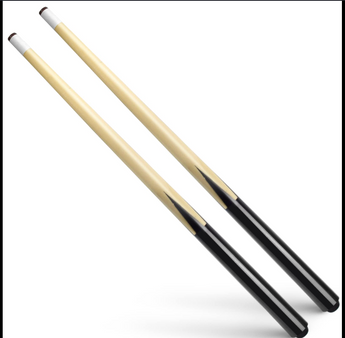
Buying your first cue stick can be confusing because many options may appear similar at first glance. Differences in weight, length, tip size, shaft material, balance, and construction can affect how comfortably and consistently you play. A suitable cue should feel natural in your hands, support proper technique, and match the type of cue sport you intend to play.
This Beginner Cue Stick Buying Guide: What to Know Before You Shop explains the main factors first-time buyers should review. Understanding these features can help you avoid purchasing a cue based only on appearance or price.
Understand the Type of Cue You Need
Before comparing individual cue sticks, identify the game you plan to play most often. Pool, snooker, and carom billiards use cues with different dimensions and tip sizes.
Pool cues are generally designed for games such as eight-ball, nine-ball, and ten-ball. They usually have thicker shafts and larger tips than snooker cues. Snooker cues are often lighter, slimmer, and fitted with smaller tips for more precise contact with smaller balls. Carom cues are commonly shorter and built for games played without pockets.
A cue designed for one game may still be usable in another, but it may not provide the control or feel expected from a sport-specific cue. Beginners should therefore select a cue that matches their primary playing format.

Choose the Right Cue Length
The standard pool cue is usually around 57 to 58 inches long. This length works well for many adult players and provides a practical balance between reach and control.
However, shorter players, younger players, or people playing in rooms with limited space may find a shorter cue more comfortable. Common shorter sizes include 48 inches and 52 inches. Taller players may prefer a slightly longer cue, although unusually long models can be harder to control for beginners.
Consider Your Playing Space
Room size is often overlooked when buying a cue. Even if a full-length cue suits your height, it may be difficult to use when the table is positioned close to a wall or furniture.
Measure the available clearance around the table before purchasing. Some players keep a standard cue for normal shots and a shorter cue for shots near restricted areas.
Select a Comfortable Cue Weight
Cue weight affects how the cue moves through the stroke and how much feedback the player feels at impact. Pool cues commonly range from 18 to 21 ounces.
A cue around 19 ounces is often a practical starting point for beginners. It is neither excessively light nor particularly heavy, making it suitable for learning a controlled stroke. A lighter cue may feel easier to move but can require greater accuracy. A heavier cue may feel stable but can encourage players to use unnecessary force.
The ideal weight depends on personal comfort rather than a universal rule. When possible, test cues of different weights before making a decision.
Look for Adjustable Weight Options
Some cue sticks include removable weight bolts in the butt section. These allow players to modify the cue’s weight as their preferences develop.
An adjustable model can be useful for beginners who are unsure about their preferred weight. Check whether replacement bolts are readily available and whether adjustments require special tools.
Review the Cue Tip Size and Material
The cue tip is the part that contacts the cue ball, so its size and condition directly affect control.
Pool cue tips commonly measure between 11.75 mm and 13 mm. Larger tips provide a wider contact area and may be easier for beginners to use consistently. Smaller tips can offer more precise contact but require better stroke accuracy.
Snooker cue tips are generally smaller, often measuring around 9 mm to 10 mm. This suits the smaller cue ball and the precision required in snooker.
Cue tips are also available in different hardness levels.
- Soft tips provide more grip on the cue ball but may require frequent shaping.
- Medium tips offer a balance between control and durability.
- Hard tips hold their shape longer but may provide less feedback.
A medium tip is usually a sensible choice for a first cue because it offers manageable maintenance and consistent performance.
Examine the Shaft Material
Traditional cue shafts are commonly made from maple or ash. Maple shafts are widely used for pool cues and are known for their smooth appearance and consistent grain. Ash shafts have a visible grain pattern and are frequently used for snooker cues.
Carbon-fibre shafts are also available. They are resistant to warping and may require less maintenance than wooden shafts. However, they are usually more expensive and can feel different from traditional wood.
For a beginner, a well-made wooden shaft often provides a suitable balance of cost, feel, and availability. The shaft should be straight, smooth, and free from dents or raised grain.
Check the Shaft for Straightness
Roll the cue gently on a flat surface or sight down the shaft from the butt toward the tip. A noticeable wobble may indicate warping.
Minor variations can occur in wooden cues, but significant bending may affect aim and stroke consistency. When buying online, review the seller’s return policy in case the cue arrives damaged or warped.
Understand One-Piece and Two-Piece Cues
A one-piece cue is made as a single unit. These cues are commonly found in pool halls and are suitable for fixed locations. They can provide a consistent feel because there is no joint between the shaft and butt.
A two-piece cue separates at the joint, making it easier to carry and store. This is usually the more practical choice for players purchasing a personal cue.
Check that the joint connects firmly without gaps or movement. Common joint materials include metal, plastic, and wood. The joint type can influence how solid or flexible the cue feels, although beginners should focus mainly on secure construction and reliable alignment.
Evaluate Balance and Grip
A cue should feel balanced when held in your normal playing position. If too much weight is concentrated at the back, the cue may feel difficult to guide. If it feels too front-heavy, maintaining a smooth stroke may become tiring.
Grip design is another personal preference. Some cues have a smooth wooden butt, while others use linen, leather, rubber, or synthetic wraps.
A smooth grip allows the cue to move naturally in the hand. A wrapped grip may provide additional friction, especially for players whose hands become damp. Avoid choosing a grip based only on appearance. It should remain comfortable during extended play.
Set a Practical Budget
Beginner cue sticks are available across a wide price range. The least expensive model may not provide reliable straightness, tip quality, or joint construction. At the same time, a first-time player does not necessarily need a professional-level cue.
Focus on build quality rather than decorative details. Inlays, glossy finishes, and elaborate designs may increase the price without improving playability.
A practical beginner cue should provide:
- A straight and smooth shaft
- A properly fitted tip
- A secure joint
- Comfortable weight and balance
- A durable finish
- Access to replacement parts
Allow room in your budget for basic accessories such as a case, chalk, tip tool, and cleaning cloth.
Do Not Overlook the Cue Case
A cue case protects the stick from moisture, impact, heat, and bending. Two-piece cues should not be carried loosely in a bag or left in a car for long periods.
Soft cases are lightweight and affordable, while hard cases offer better protection. A hard case is particularly useful for players who travel regularly or carry multiple shafts.
Store the cue horizontally or upright in a stable location. Avoid areas with extreme temperatures or high humidity because wooden shafts can warp under unsuitable conditions.
Test the Cue Before Purchasing
Whenever possible, hold and play a few shots with the cue before buying it. Pay attention to how comfortably it rests in your bridge hand, how smoothly it moves, and whether the weight feels manageable.
Do not judge a cue only by the first shot. Try straight shots, longer shots, soft positional shots, and basic spin shots. A suitable beginner cue should feel predictable rather than unusually powerful.
When shopping online, read the complete product specifications. Confirm the cue’s total length, weight, tip diameter, shaft material, joint type, and warranty terms.
Maintain Your Cue Properly
Regular maintenance helps preserve cue performance. Wipe the shaft with a dry, soft cloth after playing to remove chalk, oil, and moisture. Avoid using harsh household cleaners because they may damage the wood or finish.
Inspect the tip regularly. It should maintain a gentle rounded shape and hold chalk evenly. Replace it if it becomes excessively flat, hard, cracked, or too thin.
Do not strike balls with the side of the shaft, lean the cue against unstable surfaces, or use a playing cue for powerful break shots unless it is designed for breaking.
Common Buying Mistakes to Avoid
Beginners sometimes choose a cue based primarily on colour, branding, or decorative design. While appearance matters, it should not take priority over straightness, comfort, and construction.
Another common mistake is buying a cue that is too heavy in the belief that it will produce stronger shots. Good cue-ball control comes mainly from timing, technique, and stroke accuracy rather than cue weight.
Players should also avoid selecting an unusually small tip before developing a consistent stroke. A moderate tip size is generally easier to control during the early stages of learning.
Final Thoughts
The right cue stick should support your technique without feeling uncomfortable or difficult to control. Begin by matching the cue to your preferred game, then compare length, weight, tip size, shaft material, balance, grip, and construction.
A well-built beginner cue does not need to be expensive or highly decorative. It should be straight, comfortable, durable, and easy to maintain. By reviewing practical playing features before purchasing, you can choose a cue that supports steady improvement and remains suitable as your skills develop.