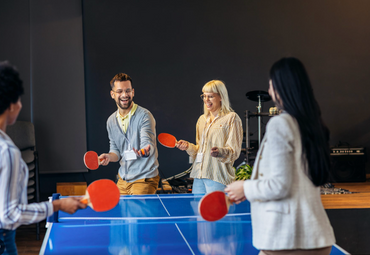
Ping pong, also known as table tennis, is a fast-paced sport that requires precision, timing, and strategy. Players at all levels from beginners to professionals often ask the same question: the most important skill in ping pong While many elements contribute to success in table tennis, the ability to control the ball consistently is widely considered the most important skill. Ball control influences every part of the game, including serving, returning, rallying, and placing shots strategically. Without control, even powerful strokes or advanced spin techniques lose their effectiveness.
Understanding this key skill helps players focus on the fundamentals that improve overall performance.
Why Ball Control Matters in Ping Pong
Ball control refers to the ability to guide the ball accurately with the paddle while maintaining consistency during rallies. It determines how effectively a player can keep the ball in play and direct it to specific areas of the table.
Maintaining Consistent Rallies
A rally continues only when both players return the ball successfully. Players with strong control can keep the ball on the table repeatedly, forcing opponents to make mistakes.
Consistency becomes especially important in competitive play, where matches are often decided by a few critical points.
Accurate Shot Placement
Control also allows players to place the ball intentionally. Instead of simply returning shots, skilled players aim for difficult angles or areas that challenge their opponents.
For example, placing the ball close to the edge or directing it to an opponent’s weaker side increases the chances of gaining an advantage during rallies.

Supporting Skills That Improve Overall Performance
Although control is central to table tennis, several supporting skills help players apply it effectively during matches.
Spin Management
Spin plays a significant role in ping pong. Players use topspin, backspin, and sidespin to influence the ball’s trajectory and bounce.
Understanding spin helps players:
- Anticipate how the ball will behave after bouncing
- Adjust paddle angles during returns
- Maintain control even when facing complex shots
Spin management works together with control to create more effective offensive and defensive plays.
Footwork and Positioning
Proper movement allows players to reach the ball quickly and return it with accuracy. Even the most skilled players struggle if they are not positioned correctly.
Effective footwork helps players:
- Maintain balance during shots
- Reach wide angles across the table
- Recover quickly between strokes
By combining strong movement with ball control, players maintain consistency throughout long rallies.
Timing and Reaction Speed
Ping pong is known for its rapid exchanges. Players must react quickly while maintaining precise paddle contact with the ball.
Good timing allows players to strike the ball at the optimal moment, which improves both accuracy and control. This becomes particularly important during fast-paced rallies or when facing aggressive attacks.
Developing Control Through Practice
Improving control requires structured practice and attention to technique. Many experienced players focus on drills designed to build consistency before developing advanced tactics.
Basic Rally Drills
Practicing controlled rallies helps players build muscle memory. Simple forehand and backhand exchanges allow players to focus on accuracy and rhythm.
These drills train players to:
- Maintain steady ball placement
- Control paddle angles
- Develop consistent shot mechanics
Target Practice
Target drills encourage players to direct the ball toward specific areas of the table. By aiming for designated zones, players strengthen their ability to place shots accurately during matches.
Over time, this practice improves both confidence and control.
Serve and Return Training
Serving is one of the few moments when players fully control the ball before play begins. Practicing serves with different spins and placements helps players refine control and create opportunities during rallies.
Return training is equally important because it prepares players to handle a variety of serves from opponents.
How Advanced Players Use Control Strategically
At higher levels of competition, control becomes a strategic advantage. Skilled players use it to dictate the pace and direction of the game.
Instead of relying solely on power, experienced players focus on:
- Varying shot speed
- Adjusting spin levels
- Placing the ball in difficult positions
By doing so, they force opponents to move constantly and make errors.
Understanding What's the Most Important Skill in Ping Pong? becomes clearer when observing professional matches. Elite players demonstrate exceptional control during long rallies, often waiting for the right moment to execute a winning shot.
Common Mistakes That Affect Ball Control
Players sometimes struggle with control due to avoidable mistakes. Recognizing these issues helps improve overall consistency.
Some common problems include:
- Incorrect paddle angle: Causes the ball to travel off the table
- Overpowering shots: Reduces accuracy and stability
- Poor positioning: Leads to rushed or unbalanced strokes
Correcting these habits improves control and makes rallies more stable.
Building Long-Term Improvement in Ping Pong
Progress in table tennis comes from consistent training and attention to fundamentals. While techniques such as spin variation and aggressive attacks are important, they become effective only when supported by reliable control.
Players who focus on improving ball placement, timing, and positioning gradually develop stronger overall performance.
Conclusion
Ping pong combines speed, strategy, and precision. Among the many abilities required to succeed in the sport, control stands out as the most essential.
For anyone asking, "What's the most important skill in ping pong the answer lies in the ability to guide the ball consistently and accurately during play. Control supports every other skill, including spin, positioning, and tactical shot selection.
By focusing on this foundation through regular practice and structured drills, players at any level can improve their performance and enjoy a more competitive and rewarding game of table tennis.