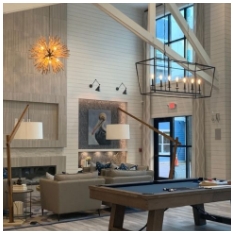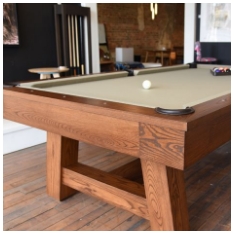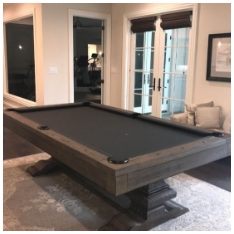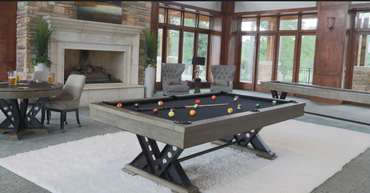
Setting up a pool table is not only about choosing the right table size or design. One of the most overlooked yet critical aspects is space planning. Without adequate room, even a premium pool table can become uncomfortable to play on. The Pool Table Space Requirement Guide helps homeowners, game room planners, and club owners understand how much space is actually needed for a smooth playing experience.
This covers standard pool table sizes, cue clearance, room layout considerations, and common planning mistakes, ensuring your setup supports proper gameplay without compromise.
Why Space Planning Matters for a Pool Table
A pool table requires free movement around all sides for accurate shots and comfortable stance. Insufficient space limits cue movement, forces awkward shot angles, and reduces overall enjoyment.
Proper spacing ensures:
- Full cue extension during shots
- Safe player movement around the table
- Consistent shot accuracy
- Long-term usability of the room
Ignoring these factors often leads to regret after installation, especially in home settings where space is limited.
Standard Pool Table Sizes Explained
Understanding table dimensions is the foundation of space planning. Pool tables are classified by playing surface size, not outer frame dimensions.
Common Pool Table Sizes
- 7-foot table: 39" x 78" playing area
- 8-foot table: 44" x 88" playing area
- 9-foot table: 50" x 100" playing area
The external size is usually 6–12 inches larger due to rails and frame, which must be considered while measuring the room.
Cue Length and Clearance Requirements
Most standard pool cues measure 57–58 inches. To play comfortably, players need space equal to cue length on all sides of the table.
Minimum Clearance Rule
- Cue length (58 inches) + table width/length on both sides
This clearance allows players to take full strokes without hitting walls or furniture.
Example
For a 7-foot table:
- Table length: 78 inches
- Clearance on both sides: 58 + 58 inches
- Minimum room length: 194 inches (16.2 feet)
This formula applies to all table sizes and forms the core of The Pool Table Space Requirement Guide.
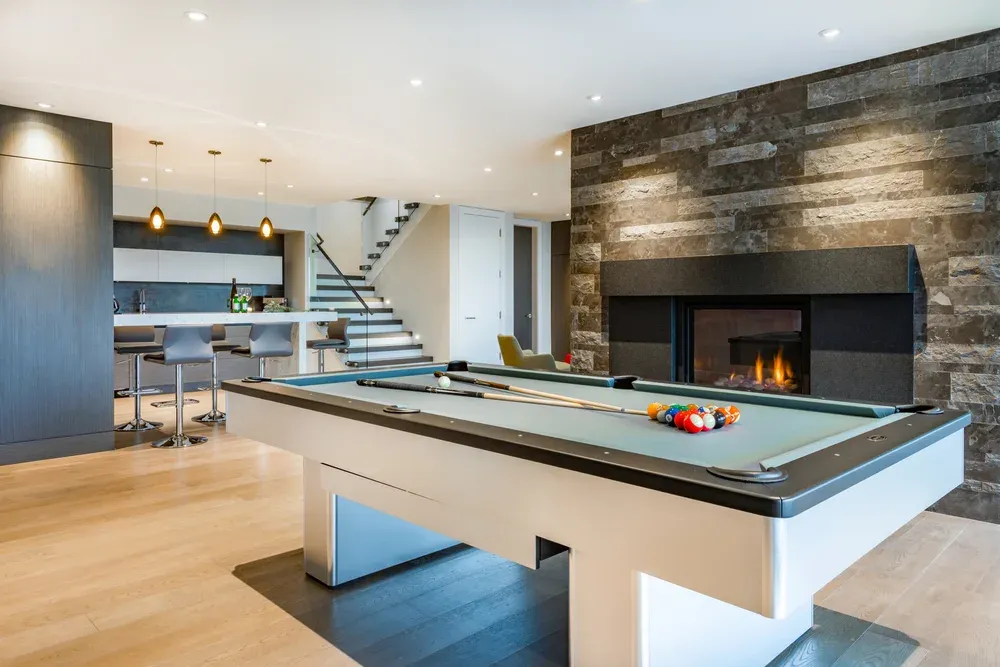
Recommended Room Sizes by Table Type
7-Foot Pool Table
- Minimum room size: 13.5 ft x 16.5 ft
- Ideal for apartments, basements, and compact game rooms
8-Foot Pool Table
- Minimum room size: 14 ft x 18 ft
- Suitable for dedicated home game rooms
9-Foot Pool Table
- Minimum room size: 15 ft x 20 ft
- Common in clubs and professional settings
Choosing a table larger than your available space may reduce playability, even if installation is technically possible.
Small Room Solutions and Adjustments
Not every space can accommodate ideal dimensions. In such cases, adjustments can help.
Practical Alternatives
- Use shorter cues for tight areas
- Choose a 7-foot table instead of larger models
- Remove unnecessary furniture
- Position the table centrally to maximize clearance
Final Thoughts
A pool table is an investment in recreation and social interaction. Its usability depends heavily on the space around it. By understanding table dimensions, cue clearance, ceiling height, and layout planning, you can create a setup that feels natural and professional.
Whether installing a table at home or designing a commercial game room, following The Pool Table Space Requirement Guide ensures comfort, accuracy, and long-term satisfaction with your pool table setup.