Billiards and pool are among the most recognized cue sports in the world. Played in homes, clubs, and international tournaments, these games have a long and detailed history. The fascinating history of billiards and pool, revealed through historical records, shows how a simple lawn game transformed into an indoor sport enjoyed across cultures and generations.
Origins of Billiards
Early Beginnings in Europe
The history of billiards can be traced back to the 15th century in Europe. It is believed that billiards evolved from outdoor lawn games similar to croquet. These games were played by striking balls through hoops using wooden sticks. As weather conditions limited outdoor play, the game was moved indoors and adapted to tables.
The first billiard tables were made of wood and featured green cloth to represent grass. Early versions included obstacles such as arches and pins, which later disappeared as the game became more refined.
Royal Influence on the Game
Billiards gained popularity among European royalty. King Louis XI of France is often credited with owning one of the first indoor billiard tables. Over time, the game spread across royal courts in France, England, and Spain. Because of its association with nobility, billiards was initially seen as a game of status and discipline.

Evolution of Equipment and Rules
Development of the Cue Stick
In early billiards, players used a mace, a club-like stick, to strike the ball. When balls rested near table edges, players began using the thin handle of the mace, which eventually led to the invention of the cue stick. This change improved accuracy and allowed more controlled shots.
By the 18th century, cue sticks became standard equipment, and chalk was introduced to reduce slipping during contact.
Introduction of Cushions and Pockets
Another major development in the fascinating history of billiards and pool, revealed through innovation, was the addition of rubber cushions. These cushions replaced earlier wooden rails and allowed balls to rebound consistently. Pockets were also added, leading to the creation of different game styles.
Birth of Pool as a Separate Game
Why It Is Called Pool
The term “pool” originated from betting pools, where players contributed money before matches. Pool rooms became popular in the United States during the 19th century, especially near transportation hubs and social halls.
Unlike traditional billiards, pool featured pocketed tables and numbered balls, making it easier for casual players to learn and enjoy.
Rise of American Pool Games
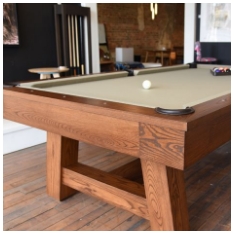
Games such as eight-ball, nine-ball, and straight pool were developed in the United States. These formats introduced structured rules and scoring systems. Pool tables became smaller than billiard tables, allowing the game to spread more easily into homes and recreational spaces.
Billiards and Pool in the Modern Era
Professional Tournaments and Governance
During the 20th century, professional organizations were formed to regulate rules and host competitions. International tournaments helped standardize equipment and gameplay. Players began to gain recognition based on skill rather than social background.
Televised events increased visibility, especially for pool games, which attracted large audiences due to their fast pace.
Technological Improvements
Modern billiard tables use slate surfaces for stability, while synthetic cloth ensures durability. Cue sticks are now designed with precision materials to enhance balance and control. These improvements have preserved the traditional nature of the game while adapting it for competitive play.
Cultural Impact of Cue Sports
Global Popularity
The fascinating history of billiards and pool, revealed across continents, shows how the game adapted to local cultures. In the United Kingdom, snooker became dominant. In the United States, pool remained popular, while carom billiards gained attention in parts of Europe and Asia.
Each variation reflects regional preferences while maintaining the core mechanics of cue sports.
Billiards in Popular Media
Billiards and pool have appeared in literature, films, and art for centuries. These portrayals often highlight the strategic and mental aspects of the game, reinforcing its image as a sport of skill and patience.
Conclusion
The fascinating history of billiards and pool, revealed through centuries of development, tells a story of adaptation and refinement. From royal courts to neighborhood clubs, the game has evolved while preserving its essential principles. Today, billiards and pool continue to connect people across age groups and cultures, standing as enduring examples of how traditional games remain relevant in modern society.