A pool cue stick is more than a piece of equipment. It directly affects accuracy, control, and consistency in every shot. Players often focus on technique and practice but overlook the importance of using the right cue. Understanding the art of choosing the perfect pool cue stick helps players align their equipment with their playing style and skill level, leading to better performance over time.
It explains the key factors involved in selecting a pool cue stick, from construction and weight to grip and tip type, without unnecessary complexity.
Why Choosing the Right Pool Cue Stick Matters
Every pool shot depends on balance, stroke control, and precision. A poorly matched cue can make even simple shots difficult, while a well-suited cue supports smoother strokes and predictable results.
The right pool cue stick:
- Improves shot accuracy
- Enhances cue ball control
- Reduces fatigue during long sessions
- Supports consistent play
Choosing correctly is less about brand preference and more about understanding how each component affects gameplay.
:max_bytes(150000):strip_icc()/basics36-57bf21313df78cc16e1dec17.jpg)
Understanding Pool Cue Construction
One-Piece vs Two-Piece Cues
Pool cues are commonly available in one-piece and two-piece designs.
- One-piece cues are often found in pool halls and are suitable for casual play.
- Two-piece cues are designed for personal use and allow easier transport and customization.
For players who practice regularly, a two-piece cue offers better consistency and control.
Shaft and Butt Design
A pool cue consists of two main parts:
- Shaft: The thinner top section used to strike the cue ball
- Butt: The thicker lower section that provides grip and balance
The way these two parts are designed influences how the cue feels during play. A smooth transition between shaft and butt supports steady strokes.
Choosing the Right Pool Cue Weight
How Weight Affects Performance
Most pool cue sticks weigh between 18 and 21 ounces. The right weight depends on playing style rather than strength.
- Lighter cues allow finer control and faster strokes
- Heavier cues provide more momentum with less effort
Players who rely on precision often prefer lighter cues, while those who favor power shots may choose heavier ones.
Finding a Comfortable Balance
Weight distribution matters as much as total weight. A cue that feels balanced in the hand helps maintain stroke consistency. Testing different weights before making a decision is strongly recommended.
Pool Cue Length and Grip Considerations
Standard Cue Length
Most pool cue sticks are around 57 to 58 inches long. This length suits the majority of players and table sizes.
Shorter cues are used in limited spaces, while longer cues may suit taller players. The goal is to ensure comfortable reach without straining posture.
Grip Style and Feel
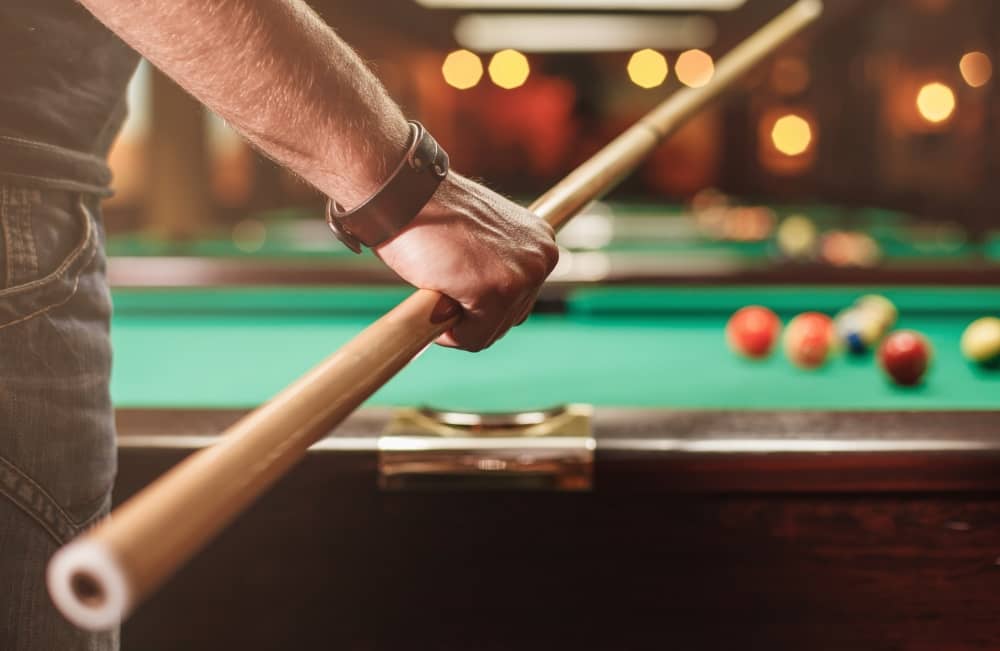
The grip area affects how securely the cue sits in your hand. Common grip options include:
- Linen wrap
- Leather wrap
- Wrapless finishes
Some players prefer a textured grip for control, while others prefer a smooth surface for flexibility. Comfort should guide this choice.
Cue Tip Types and Their Role
Hard vs Soft Tips
The cue tip directly contacts the cue ball, making it one of the most important components.
- Hard tips last longer and provide consistent contact
- Soft tips allow better spin control but require more maintenance
Players focused on cue ball control often lean toward softer tips, while those seeking durability may choose harder ones.
Tip Size and Control
Standard tip sizes range from 12 to 13 millimeters. Smaller tips allow more precise spin, while larger tips offer forgiveness on off-center hits. Selecting the right size depends on experience and playing style.
Materials Used in Pool Cue Sticks
Shaft Materials
Most shafts are made from maple wood due to its strength and smooth grain. Some cues use advanced materials to reduce deflection and improve consistency.
A quality shaft should:
- Feel smooth during strokes
- Maintain shape over time
- Respond predictably to contact
Butt Materials and Design
Cue butts may include wood, composite materials, or decorative inlays. While appearance does not affect play, structural stability does. A solid butt improves balance and durability.
Matching a Pool Cue to Your Playing Style
Beginners
New players benefit from cues that offer balance and forgiveness. A medium-weight cue with a standard tip size helps build consistency without overcomplicating technique.
Intermediate and Advanced Players
Experienced players often look for cues that support their preferred shot types. This includes specific weight distributions, tip softness, and shaft performance. At this level, subtle differences matter more.
Maintenance and Longevity
Choosing the right pool cue stick also involves understanding care requirements.
Proper maintenance includes:
- Keeping the shaft clean
- Shaping and replacing tips when needed
- Storing the cue in a protective case
Well-maintained cues perform consistently and last significantly longer.
Conclusion
Understanding the art of choosing the perfect pool cue stick requires attention to detail rather than guesswork. Weight, balance, material, tip type, and grip all contribute to how a cue performs during play. A cue that matches your playing style supports accuracy, control, and consistency over time.
Rather than following trends, players should focus on comfort, reliability, and fit. The right pool cue stick becomes a natural extension of the player, supporting steady improvement and confident gameplay.