Understanding How to hold a pool stick properly? Hand position, Grip and Bridge is one of the most important fundamentals in cue sports. Many beginners focus heavily on aiming or shot power, but without proper cue control, even the best aiming techniques fall apart. Correct hand placement, a relaxed grip, and a stable bridge create the foundation for consistent and accurate shots.explains each element step by step so you can develop a reliable technique that improves performance over time.
Why Proper Pool Stick Technique Matters
Holding the cue correctly ensures a straight stroke, better cue ball control, and fewer unintentional errors. Poor grip or unstable hand placement often leads to miscues, unwanted spin, and inconsistent shot results.
When your hand position, grip, and bridge work together, your stroke becomes smoother and more repeatable. This consistency is what separates casual players from confident, controlled players.
Hand Position: Building a Stable Foundation
Hand position refers to how both hands interact with the cue. Each hand has a specific role that affects accuracy and balance.
Dominant Hand Placement
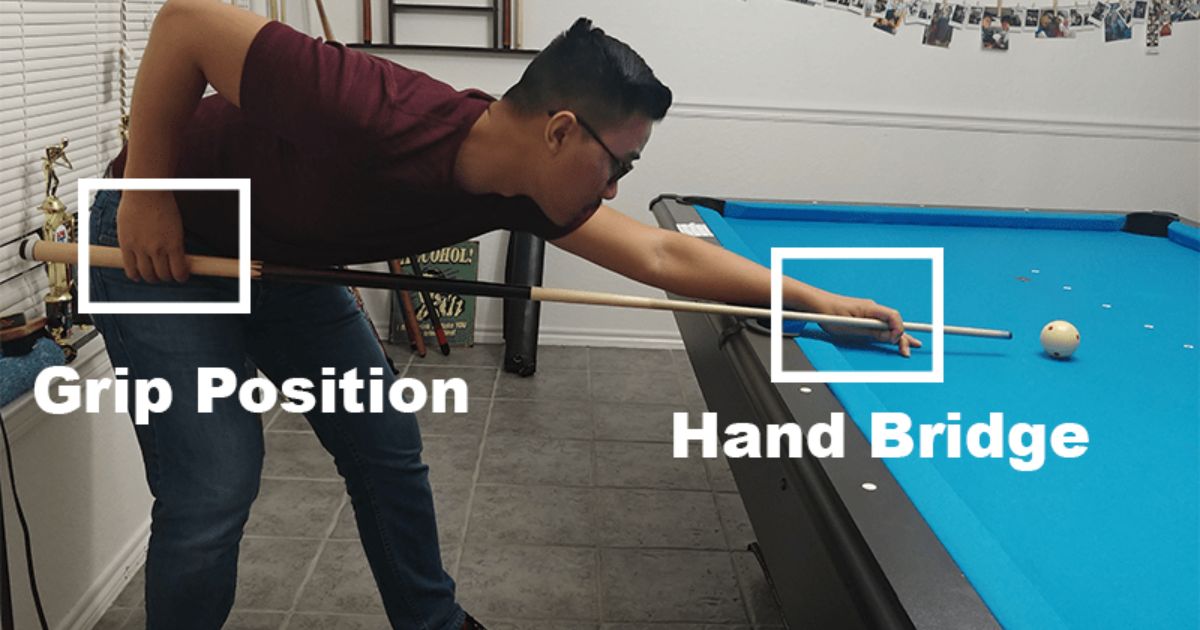
Your dominant hand controls the cue’s movement. It should be positioned near the back end of the cue, usually 4 to 6 inches from the butt cap. This distance allows natural movement without forcing the wrist or elbow into an awkward angle.
Keep your forearm vertical at the point of contact with the cue ball. This alignment supports a straight, pendulum-like stroke.
Non-Dominant Hand Role
The non-dominant hand forms the bridge and guides the cue’s direction. Its placement on the table determines how stable and level your cue travels. A well-positioned bridge reduces wobble and increases accuracy.
Grip: Control Without Tension
One of the most common mistakes is gripping the cue too tightly. A firm grip restricts movement and causes jerky strokes.
How Tight Should the Grip Be?
The grip should be relaxed, similar to holding a pen firmly enough that it does not fall. Your fingers should wrap around the cue naturally, with the thumb resting lightly against the index finger.
Avoid squeezing the cue during the stroke. The cue should slide freely through your fingers as your arm moves.
Wrist and Finger Alignment
Keep your wrist straight and flexible. Excessive wrist movement or bending introduces unwanted side motion. Your grip hand should remain relaxed from the backswing through the follow-through.
Bridge: Guiding the Cue Accurately
The bridge is the most critical guiding element in cue control. It stabilizes the cue and keeps it on line throughout the stroke.
Open Bridge Technique
An open bridge is commonly used for beginners and most standard shots.
- Place your hand flat on the table
- Spread your fingers for stability
- Raise your knuckles slightly
- Rest the cue in the groove between your thumb and index finger
This bridge offers excellent visibility and control, especially for straight shots.
Closed Bridge Technique
A closed bridge wraps the index finger over the cue, creating a loop.
- Place your hand on the table
- Form a loop with your index finger over the cue
- Press the thumb lightly against the index finger
This bridge provides added control for shots requiring more power or spin, but it takes practice to execute consistently.
Aligning Hand Position, Grip, and Bridge
Learning How to hold a pool stick properly? Hand position, Grip and Bridge is about coordination, not isolated techniques. Each element must support the others.
Your bridge should align the cue with your target line. The grip should allow smooth movement without resistance. Together, they create a straight, controlled stroke that remains consistent under pressure.
Practicing Proper Technique
Consistent practice reinforces correct habits. Focus on slow, deliberate strokes while paying attention to hand position and grip pressure. Mirror practice or recording your stroke can help identify issues early.
Start with simple straight shots and gradually increase difficulty as your control improves.
Conclusion
Mastering How to hold a pool stick properly? Hand position, Grip and Bridge is essential for long-term improvement in pool. Correct hand placement creates balance, a relaxed grip ensures smooth movement, and a stable bridge keeps the cue on line. Together, these fundamentals build consistency, accuracy, and confidence at the table.
With focused practice and attention to technique, these skills become second nature and form the foundation for advanced shot-making.