Choosing a ping pong table may seem straightforward, but the decision involves more than simply picking a model within your budget. The right table depends on where you plan to use it, how often you will play, and the level of competition you expect. Whether you are setting up a table for casual family games, school tournaments, or regular practice sessions, understanding the technical and practical factors is essential. explains how to choose the right ping pong table by breaking down size standards, table thickness, material quality, storage options, and long-term durability. With the right approach, you can select a table that offers consistent bounce, stable construction, and long service life.
Understand Standard Table Dimensions
The first step in learning how to choose the right ping pong table is understanding official size specifications.
A regulation table measures:
- 9 feet long
- 5 feet wide
- 2.5 feet high
If you are buying a table for competitive practice or tournaments, these dimensions are mandatory. However, for recreational use in smaller rooms, compact or mid-size tables are also available.
Room Space Requirements
Beyond the table size itself, you need enough playing space around it. Ideally, allow:
- At least 3 to 5 feet behind each end
- 3 feet on each side
Limited space can restrict player movement and reduce the playing experience. Always measure your room before purchasing.
Decide Between Indoor and Outdoor Tables
One of the most important decisions when considering how to choose the right ping pong table is whether it will be placed indoors or outdoors.
Indoor Tables
Indoor tables are typically made from wood-based surfaces such as MDF (medium-density fiberboard). They provide:
- Better bounce consistency
- Smooth playing surface
- Professional-level performance
However, they are not designed to withstand moisture or temperature changes.
Outdoor Tables
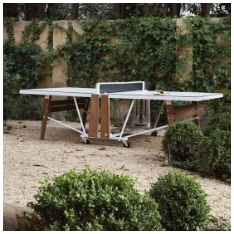
Outdoor tables use weather-resistant materials such as aluminum composite or resin laminate. These tables:
- Resist rain and humidity
- Require less maintenance
- Are suitable for patios and open spaces
While outdoor tables are durable, bounce quality may differ slightly compared to high-end indoor models.
Evaluate Table Thickness and Bounce Quality
Surface thickness directly affects gameplay. When deciding how to choose the right ping pong table, this factor should not be overlooked.
- 12–15 mm thickness: Suitable for beginners and recreational use
- 16–19 mm thickness: Good bounce consistency for regular players
- 22–25 mm thickness: Professional-grade performance
Thicker surfaces provide a more uniform bounce, which improves shot accuracy and control. Competitive players generally prefer thicker tables.
Check Frame Construction and Stability
A ping pong table must remain stable during play. Weak frames can result in uneven bounce and vibration.
Look for:
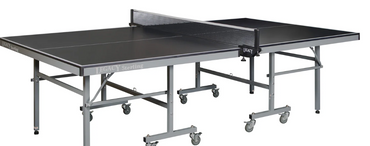
- Steel frames
- Strong leg supports
- Locking wheels for foldable models
- Adjustable leg levelers
If the table wobbles, it can affect gameplay significantly. Stability is especially important for competitive practice.
Consider Storage and Portability
Many modern tables are foldable. If you have limited space, this feature becomes important when choosing the right ping pong table.
Foldable Design
Foldable tables:
- Save storage space
- Allow easy movement
- Often include safety locks
Some models also allow one side to be folded upright for solo practice. This is useful for players who train alone.
Wheel Quality
If the table includes wheels, ensure they:
- Roll smoothly
- Lock securely during play
- Are durable for long-term use
Choosing Based on Skill Level
Understanding player experience helps narrow down options.
- Beginners: Mid-size or 15 mm thickness tables
- Intermediate players: 18–19 mm thickness
- Advanced or competitive players: 22 mm or thicker surfaces
Matching table quality to skill level ensures proper gameplay development.
Conclusion
Learning how to choose the right ping pong table involves evaluating multiple factors beyond price. Table dimensions, surface thickness, indoor or outdoor placement, frame stability, storage options, and long-term durability all influence your final decision.
A well-chosen table improves gameplay consistency and provides lasting value. Whether you are purchasing for family recreation, school use, or competitive training, selecting the correct table ensures a better playing experience and long-term satisfaction.
By carefully assessing your space, playing frequency, and skill level, you can confidently invest in a ping pong table that meets your needs and supports steady improvement over time.