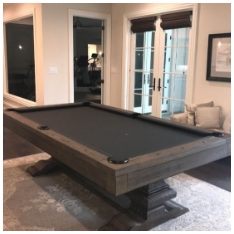
Selecting the right pool table surface is more than just a design choice it defines how smoothly the balls roll, how long your table lasts, and how enjoyable each game feels. Whether you’re a beginner or an experienced player, understanding different pool table surfaces will help you make a confident decision before you invest.
Understanding the Importance of the Pool Table Surface
When you play pool, every shot depends on the smoothness and stability of the table’s surface. The right material ensures consistent ball movement and prevents warping over time. A good surface also affects how accurately the balls respond to spin and rebound. In short, the surface you choose determines both playability and long-term performance.
There are three main types of pool table surfaces: slate, medium-density fiberboard (MDF), and slate alternatives or synthetic materials. Each has its strengths and weaknesses.
Slate Pool Table Surface
What Is Slate?
Slate is a fine-grained rock that can be cut and polished into a perfectly flat surface. It has been the industry standard for professional and high-quality pool tables for decades.
Advantages of Slate
- Durability: Slate is known for its strength and resistance to warping. It can last for decades if maintained properly.
- Smooth Play: Because it’s perfectly flat, it allows for accurate and consistent ball movement.
- Professional Standard: All tournament-quality tables use slate surfaces, making it ideal for serious players.
Drawbacks of Slate
- Weight: Slate tables are extremely heavy, which makes them difficult to move or set up.
- Cost: They are generally more expensive due to their quality and longevity.
- Installation: Professional installation is necessary to ensure perfect leveling.
If your priority is performance and you plan to use the table for many years, a slate pool table is the best investment.

MDF Pool Table Surface
What Is MDF?
MDF (Medium Density Fiberboard) is a manufactured wood product made from compressed wood fibers. It’s commonly used in affordable or entry-level pool tables.
Advantages of MDF
- Affordable: MDF tables are much cheaper than slate tables, making them great for beginners or casual players.
- Lightweight: Easier to move and install, which makes them perfect for smaller spaces or temporary setups.
- Variety: They come in different designs and finishes to match home interiors.
Drawbacks of MDF
- Warping Risk: Exposure to humidity or temperature changes can cause the surface to warp over time.
- Less Consistent Play: The surface may not provide the same precision or smoothness as slate.
- Shorter Lifespan: MDF tables typically don’t last as long as slate ones, especially with heavy use.
If you’re setting up a game room at home and play occasionally, MDF offers a budget-friendly solution without compromising too much on fun.
Slate Alternatives and Synthetic Surfaces
Modern technology has introduced synthetic slate and other composite materials that aim to offer the benefits of slate without its high cost or weight.
Advantages
- Lightweight and Durable: Easier to move and set up compared to traditional slate.
- Improved Moisture Resistance: Some synthetic surfaces handle humidity better than MDF.
- Cost-Effective: They sit between MDF and slate in terms of price and performance.
Drawbacks
- Not True Slate Quality: While close, synthetic surfaces still lack the same smoothness and precision as real slate.
- Limited Availability: Not as widely available as slate or MDF tables.
These surfaces are suitable if you want something better than MDF but don’t want to invest in a full slate table.
Cloth Type and Surface Feel
The surface material isn’t the only factor that affects play. The cloth covering the table also plays a vital role. Most pool tables use either woolen cloth or worsted cloth.
- Woolen Cloth: Slower and thicker, suitable for casual play and family use.
- Worsted Cloth: Thinner and faster, ideal for professional-level games.
Choosing the right cloth depends on your playing style and how fast you want the game to feel.
Maintenance Tips for Your Pool Table Surface
No matter which surface you choose, proper care keeps it performing well for years.
- Keep it clean: Use a soft brush or vacuum to remove chalk dust and debris.
- Control humidity: Maintain a stable room temperature to prevent warping.
- Cover it: Always use a pool table cover when not in use to protect from dust and spills.
- Avoid heavy objects: Don’t sit or place heavy items on the table—it can cause permanent damage.
- Professional service: Occasionally re-level or re-cloth the table for consistent performance.
How to Decide Which Surface Is Right for You
When choosing which pool table surface is right for you, consider these key points:
- Purpose: Is it for professional use, casual home play, or occasional entertainment?
- Serious players → Slate
- Home/family use → MDF or synthetic
- Budget: Slate costs more but lasts longer. MDF is cheaper but less durable.
- Space and mobility: If you need to move the table often, lighter MDF or synthetic options are better.
- Climate: For humid areas, slate or moisture-resistant synthetic materials perform best.
Your decision should balance performance, durability, and practicality. It’s not just about cost it’s about choosing a table that fits your lifestyle.
Final Thoughts
When it comes to choosing which pool table surface is right for you, think long-term. If you’re passionate about pool and want tournament-level performance, slate is unmatched. If you’re starting out or want something lighter and more affordable, MDF or synthetic surfaces are good options.
The best pool table is the one that fits your playing style, space, and budget while providing a smooth, enjoyable game every time. By understanding the different surfaces and how they affect play, you can make a smart choice that ensures years of fun and reliability.