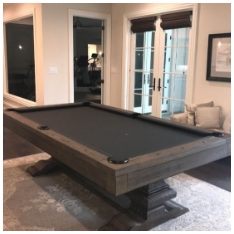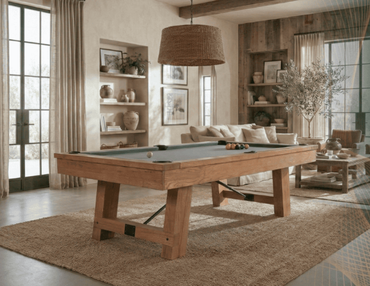
A pool table can become a central feature in a game room, living area, entertainment space, or dedicated recreation room. However, selecting the right table involves more than choosing a design that looks appealing. Room dimensions, playing clearance, table size, construction, and overall interior style all need to be considered before making a decision.
If you are asking, 'How Do You Choose the Right Pool Table for Your Space?', the process should begin with measuring the room and understanding how much clearance players will need around the table. From there, you can compare table sizes, materials, layouts, and design preferences to find an option that suits both the space and the way the room will be used.
Measure the Available Room Carefully
The first step is to measure the length and width of the room where the pool table will be placed. The table itself is only part of the space requirement. Players also need enough room to move around comfortably and use a cue without hitting walls, furniture, or other objects.
Measure the usable floor area rather than the total room size. Features such as built-in cabinets, columns, fireplaces, or fixed furniture can reduce the amount of practical playing space.
It is also helpful to consider doorways and access routes. A table may fit comfortably once installed but could be difficult to move into the room if entrances, corridors, or staircases are narrow.
Allow Enough Cueing Space
A standard pool cue is generally around 57 to 58 inches long. This means there should be sufficient clearance around every side of the table.
A room that only accommodates the physical table dimensions may feel cramped during play. Ideally, players should be able to take a full shot from every side without adjusting their stance unnecessarily.
Shorter cues can sometimes be used in tighter areas, but they are generally better suited as a practical solution for occasional shots rather than as the primary playing setup.
Choose the Right Pool Table Size
Pool tables are available in several sizes, and the best choice depends on both available space and intended use.
Common residential sizes include 7-foot, 8-foot, and 9-foot tables. Smaller tables can work well in compact game rooms, while larger tables provide a more spacious playing surface.
An 8-foot table is a common choice for home use because it offers a balance between comfortable play and manageable room requirements. A 9-foot table usually requires considerably more space and may be better suited to larger recreation rooms.
Before selecting a size, compare the full table dimensions with the room measurements and required cue clearance.
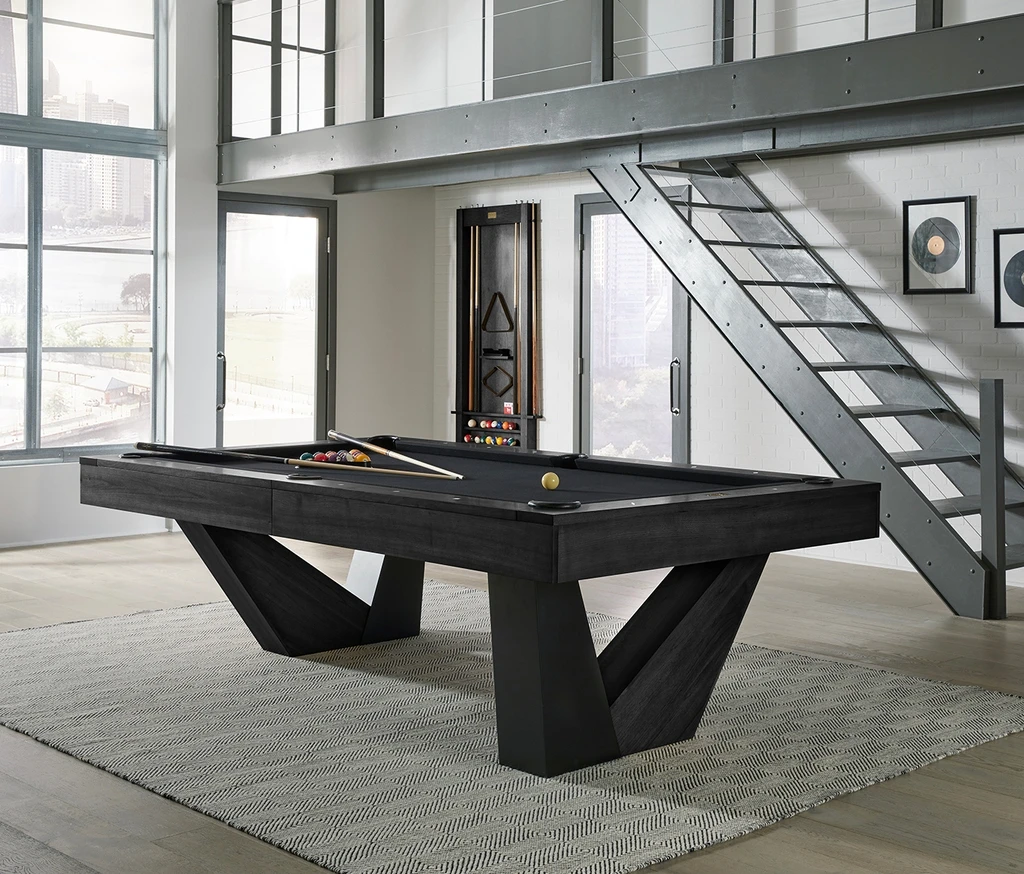
Consider How the Room Will Be Used
The role of the room should influence the type of pool table you choose.
A dedicated game room may allow the pool table to occupy most of the available space. In contrast, a living room or multipurpose entertainment area may also need seating, storage, walkways, and other furniture.
Think about whether the pool table will be the main feature or one of several activities within the room.
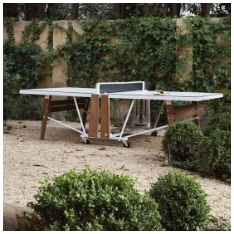
If the area needs to serve multiple purposes, a compact table or a pool table that can double as a dining or activity surface may be worth considering.
Maintain Clear Walkways
The room should remain easy to move through even when people are playing.
Avoid placing a table so close to doors, seating areas, or cabinets that movement becomes difficult. Maintaining clear pathways can make the overall room more functional and reduce interruptions during a game.
Look at the Construction and playing surface.
Pool table construction can affect stability, durability, and playing quality.
Slate is commonly used for higher-quality playing surfaces because it provides a flat, consistent base. Tables may use a single piece of slate or multiple slate sections depending on their design.
Other tables use engineered wood or alternative playing surfaces. These options may be lighter and easier to move, but performance can differ from a traditional slate table.
The frame is equally important. Solid construction helps support the weight of the playing surface and maintain proper alignment over time.
Match the Pool Table to the Interior Style
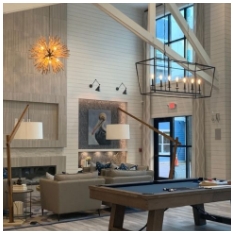
A pool table is a substantial piece of furniture, so its appearance can influence the entire room.
Traditional tables may feature carved legs, darker wood finishes, and classic detailing. Modern designs often use clean lines, simpler frames, metal accents, or neutral finishes.
Consider existing flooring, wall colors, furniture, and lighting when choosing a table finish.
The goal does not need to be an exact match. A pool table can act as a contrasting feature as long as its materials and proportions work comfortably with the surrounding interior.
Consider Cloth Color Carefully
The cloth is one of the most visible parts of the table.
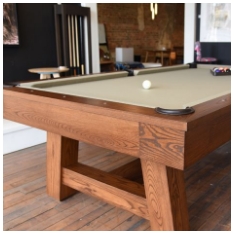
Traditional green remains a familiar choice, but pool table cloth is available in many colors. Neutral shades, blues, greys, and other tones can help the table fit into contemporary interiors.
When selecting a cloth color, consider both appearance and visibility. The balls should remain easy to see under the room's lighting conditions.
Plan the Lighting Above the Table
Proper lighting is important for comfortable play.
The table should be evenly illuminated without strong shadows or glare. A dedicated overhead fixture can help provide consistent light across the entire playing surface.
The fixture should be positioned high enough that it does not interfere with players while still directing adequate light onto the table.
If the room already has ceiling lights, assess whether they provide sufficient coverage before deciding whether additional lighting is required.
Think About Long-Term Placement
Pool tables are large and can be difficult to relocate once installed. For this reason, it is useful to consider how the room may change over time.
Think about future furniture arrangements, renovations, or changes in how the space will be used. Choosing a suitable position from the beginning can reduce the need for later adjustments.
The floor should also be strong, level, and appropriate for the table's weight, particularly when installing a slate model.
Check Installation Requirements
A properly installed pool table should be level and securely assembled.
Larger slate tables are often installed in sections and require careful alignment. Professional installation may help ensure the frame, slate, cloth, rails, and pockets are correctly positioned.
Before purchasing, confirm whether installation is included and whether the table can be delivered safely to the intended room.
Conclusion
How Do You Choose the Right Pool Table for Your Space? starts with accurate room measurements and enough clearance for comfortable cueing. Table size, playing surface, construction, lighting, interior style, and room function should all be considered before making a final choice.
A pool table should fit the room physically while also supporting comfortable play and everyday movement. By evaluating the space carefully and considering how the table will be used over time, you can select a size and design that fits naturally into the room and provides a practical playing environment.