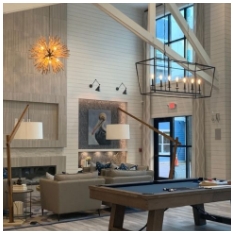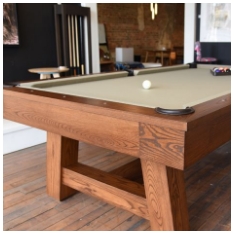
A pool table can become a central entertainment feature during summer gatherings, especially when friends and family are spending more time together at home. However, choosing the correct table size requires more than selecting the largest model that fits the room.
The right pool table should provide enough playing space, comfortable cue movement, and sufficient room for guests to walk around without feeling restricted. If you are planning to choose the right pool table size for summer gatherings, consider both the dimensions of the table and the amount of clearance available around it.
Careful planning can help create a practical entertainment area that works well for casual games, social occasions, and regular use throughout the year.
Understand Standard Pool Table Sizes
Pool tables are available in several common sizes, and each option suits a different type of room and playing preference.
The most widely used sizes include:
- 6-foot pool tables
- 7-foot pool tables
- 8-foot pool tables
- 9-foot pool tables
Smaller tables are often suitable for compact entertainment rooms, apartments, or multipurpose spaces. Larger tables generally provide a more traditional playing experience but require considerably more floor space.
Before selecting a size, measure the room carefully rather than relying only on the stated dimensions of the table.
Consider the Full Playing Area
One of the most common mistakes when selecting a pool table is measuring only the space required for the table itself.
Players also need enough clearance around all four sides to use a cue comfortably. Standard cues are usually around 57 to 58 inches long, which means the room needs additional space beyond the dimensions of the playing surface.
Allow Enough Cue Clearance
Ideally, players should be able to take a full shot without the cue hitting a wall, furniture piece, or doorway.
For example, an 8-foot pool table may physically fit inside a room, but if the walls are too close, certain shots may become difficult or uncomfortable.
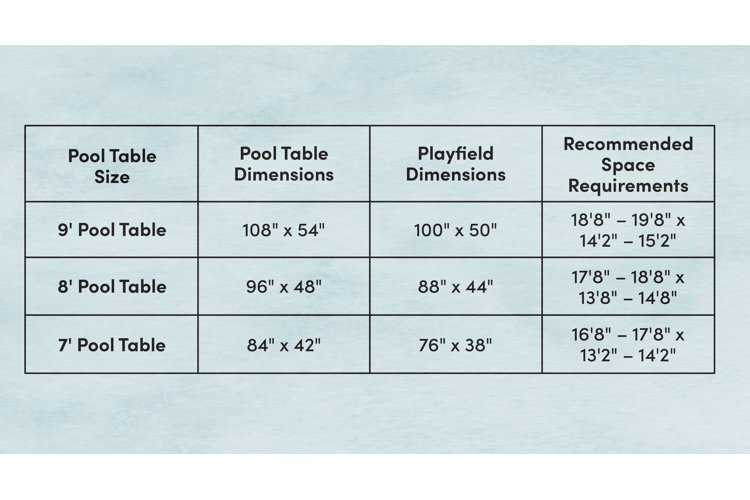
When measuring, consider the table dimensions plus approximately five feet of clearance around each side where possible.
This creates a more practical playing environment and reduces the need to use shorter cues.
Match the Pool Table Size to the Room
Room dimensions should be the primary factor when deciding which pool table size to choose.
A 7-foot table can work well in smaller rooms because it provides a good balance between playability and space efficiency. An 8-foot table is often suitable for medium to large game rooms, while 9-foot tables are generally better suited to spacious dedicated entertainment areas.
If the room contains other furniture, measure the usable floor area rather than the total room size.
Large sofas, storage units, bars, entertainment consoles, and dining furniture can significantly reduce the available playing space.
Think About How the Room Will Be Used
Summer gatherings often involve more than pool games. Guests may be walking through the space, sitting nearby, carrying food and drinks, or moving between indoor and outdoor areas.
For this reason, the largest possible pool table is not always the most practical choice.
A slightly smaller table may provide better movement around the room and leave space for seating or other entertainment features.
Maintain Comfortable Guest Flow
Consider how people will enter and exit the room while others are playing.
Walkways should remain clear, particularly near doors, patios, kitchens, or outdoor entertainment areas. Guests should not need to cross directly through the playing zone each time they move around.
Maintaining clear circulation space can make the room more comfortable during larger gatherings.
Compare 7-Foot, 8-Foot, and 9-Foot Tables
Each table size offers different advantages.
7-Foot Pool Tables
A 7-foot table is a practical choice for smaller entertainment rooms. It provides enough space for casual games while leaving more room for furniture and guest movement.
This size may be particularly suitable for homes where the game room serves several purposes.
8-Foot Pool Tables
An 8-foot pool table is a popular residential option because it offers a larger playing surface without requiring the same amount of space as a 9-foot model.
It can work well in dedicated game rooms, larger living areas, or entertainment spaces designed for regular gatherings.
9-Foot Pool Tables
A 9-foot table provides a larger playing area and is commonly associated with tournament-style play.
However, it requires a spacious room and substantial clearance on every side. It may be suitable for dedicated game rooms where other furniture is limited.
Consider Seating Around the Pool Table
Guests who are not currently playing will need somewhere to sit.
When planning the room, leave space for chairs, stools, benches, or a small lounge area. Seating should be positioned far enough from the table that players can move freely.
Avoid placing chairs directly behind areas where players are likely to take shots.
For summer entertaining, lightweight seating can be useful because it can be moved depending on the number of guests.
Think About Indoor and Outdoor Spaces
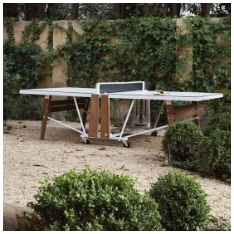
Some pool tables are designed specifically for outdoor or covered patio environments.
If you are considering an outdoor table for summer use, check whether the materials are suitable for humidity, temperature changes, and occasional moisture exposure.
Outdoor pool tables may be appropriate for covered terraces, poolside entertainment spaces, or large patios, provided they are designed for those conditions.
Indoor tables should generally remain in climate-controlled spaces to protect the playing surface and frame.
Measure Before Making a Final Decision
Before purchasing a pool table, create a simple floor plan of the room.
Mark the location of:
- Doors
- Windows
- Furniture
- Storage units
- Walkways
- Electrical outlets
- Seating areas
Then mark the dimensions of the proposed pool table and the clearance required around it.
This simple exercise can reveal potential space problems before the table is installed.
Do Not Choose Based on Table Size Alone
Dimensions are important, but other factors should also influence the decision.
Consider the construction quality, playing surface, frame, cushion response, and overall design of the table. The table should also suit the visual character of the room.
A well-proportioned table that fits comfortably in the space will generally provide a better experience than an oversized table that restricts movement.
Conclusion
Knowing how to choose the right pool table size for summer gatherings starts with accurate room measurements and realistic expectations about how the space will be used.
Consider not only the dimensions of the pool table but also cue clearance, furniture placement, seating, walkways, and guest movement. A 7-foot table may suit a compact multipurpose room, an 8-foot table can work well in many residential game rooms, and a 9-foot table generally requires a dedicated larger space.
By balancing playing requirements with available floor space, you can create an entertainment area that remains comfortable, practical, and enjoyable during summer gatherings and throughout the rest of the year.