Air hockey is a fast-paced table game that is easy to start playing but takes practice to play well. Two players use handheld paddles, commonly called strikers or mallets, to hit a puck into the opponent’s goal. The smooth table surface uses a cushion of air to reduce friction, allowing the puck to move quickly.
The game is popular in homes, game rooms, arcades and recreational spaces because it is simple to understand and enjoyable for different age groups. A match can last only a few minutes, yet every point requires focus, timing and quick reactions.
What Equipment Do You Need for Air Hockey?
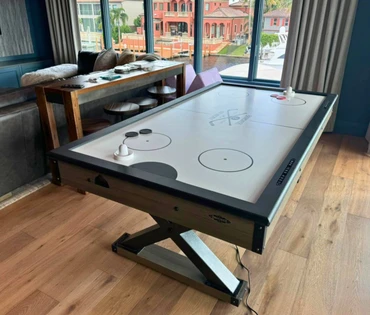
An air hockey table has a flat playing surface with small holes that release air from below. The airflow allows the puck to glide across the table with minimal resistance. Most tables also have goals at each end, side rails and a scoring system.
The main equipment includes:
- Air hockey table: Available in compact home sizes and larger arcade-style models
- Puck: A lightweight plastic disc that moves across the table
- Strikers or mallets: Handheld pieces used to hit and defend against the puck
- Scoreboard: May be manual, electronic or digital, depending on the table
Before beginning a game, make sure the table is switched on and the airflow is working evenly. If the puck does not glide smoothly, check that the surface is clean and that the air holes are not blocked by dust or debris.
Basic Air Hockey Rules
Air hockey rules can vary slightly between homes, arcades and tournaments, but the basic objective remains the same: score by sending the puck into your opponent’s goal.
A game is often played until one player reaches a set score, such as 5, 7 or 10 points. Players may also agree to play for a fixed amount of time and award the win to the person with the higher score.
Starting the Game
The puck is usually placed on the table by one player or served after a goal. In casual play, players can decide who starts through a coin toss or by taking turns.
Keep the puck on your own side before making a serve. Once it is in play, both players can strike it as it moves across the centre line.

Scoring a Point
A point is scored when the puck enters the opponent’s goal. The puck must pass completely into the goal area for the point to count.
After a goal, play restarts with the puck placed back on the table. It is helpful to pause briefly after each score so both players are ready before the next serve.
Common Fouls to Avoid
Basic air hockey etiquette and rules usually prevent players from gaining an unfair advantage. Avoid the following actions:
- Touching the puck with your hand
- Holding the puck against the table for too long
- Reaching across the centre line with the striker
- Lifting the striker to strike down on the puck
- Blocking the goal with your hand or body
- Hitting the puck before it crosses to your side
In casual games, agree on the rules before playing. This avoids confusion and keeps the match fair for both players.
How to Hold and Position Your Striker
Hold the striker comfortably from the top handle. Your grip should be firm enough to maintain control but not so tight that your wrist becomes stiff. A relaxed grip allows you to move the striker quickly and adjust your angle when the puck changes direction.
Keep Your Striker Near the Goal
Beginners often move their striker too far forward and leave the goal exposed. A better starting position is slightly in front of the goal, where you can defend the centre and move quickly to either side.
From this position, you can react to direct shots and use the striker to guide the puck towards the side rails. Staying close to the goal does not mean remaining still. Move the striker in short, controlled motions as the puck travels.
Watch the Puck, Not Only Your Opponent
It can be tempting to focus on the opponent’s movements, but the puck should remain your main point of attention. Watch its speed, angle and direction. This will help you react earlier and avoid late defensive movements.
Over time, you may notice patterns in your opponent’s shots. Some players favour a particular corner or use the same bank shot repeatedly. Recognising these habits can improve your defence.
Essential Attacking Techniques
Strong air hockey play involves more than hitting the puck as hard as possible. Accuracy, timing and placement usually matter more than power.
Use Straight Shots
A direct shot towards the goal can work well when the opponent leaves an opening. Aim for a corner rather than the centre, as the centre is easier to defend.
Keep your striker low and make a clean forward movement. A rushed shot can send the puck into the side rail, making it easier for the opponent to regain control.
Try Bank Shots
A bank shot sends the puck into the side rail so that it changes direction before moving towards the goal. These shots can be useful when the opponent is guarding the centre.
Practise observing the puck’s angle after it hits the rail. The more familiar you become with the table, the easier it is to predict where the puck will travel.
Change Your Pace
Do not use the same shot speed every time. A slow, controlled shot can catch an opponent off guard if they are expecting a fast strike. Similarly, a sudden quick shot can create a scoring chance when the opponent is not positioned properly.
Defensive Tips for Beginners
Good defence is the foundation of consistent air hockey play. Keep your striker close enough to the goal to block direct shots, but remain ready to move sideways.
Avoid chasing every puck aggressively. If the puck is near the side rail, wait for it to move into a safer position before attempting a controlled return. Overreaching can create an open goal.
Try to send defensive returns towards the corners or side rails. This gives you more time to reset your position and can make the next shot harder for your opponent.
Caring for an Air Hockey Table
Regular maintenance helps the puck glide smoothly and keeps gameplay enjoyable. Wipe the table surface with a soft, dry cloth after use to remove dust. Avoid placing drinks, food or heavy objects on the table.
Check the puck and strikers for cracks or rough edges. Damaged equipment can scratch the surface or affect puck movement. If the table has an electronic scoreboard, follow the manufacturer’s instructions for power use and battery replacement.
Final Thoughts
Air hockey is simple to begin, but developing control takes time and practice. Learn the basic rules, keep your striker in a strong defensive position and focus on accurate shots rather than only powerful ones.
With regular play, you can improve your reactions, puck control and ability to read the game. Whether you are playing casually with friends or practising to become more competitive, air hockey offers an enjoyable way to build skill and spend time away from screens.